Guest Writer
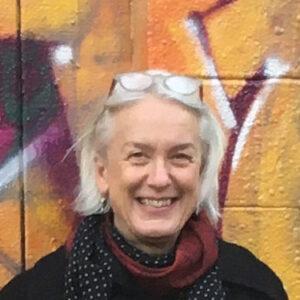
Robert Kentta. Photo by Brandi Herrera
Robert Kentta is a Tribal Council Member and former Cultural Resources Director for the Confederated Tribes of Siletz Indians. He is receiving a 2025 Indigenous Leadership Awards in recognition for his lifelong dedication to cultural preservation, tribal governance, and advocacy on behalf of his tribe.

At 25, Robert Kentta was midway through college at the Institute of American Indian Arts (IAIA) when he was awarded a fellowship at the Newberry Library in Chicago in 1985. Using his IAIA skills in museum curation, he dug into the archives, unearthing news clips, microfilm, books, manuscript materials, and government documents describing the history of his people, the Confederated Tribes of Siletz Indians. It was “life altering, ” he said, when he realized there were two starkly different versions of the same story of his Tribe.
“That (fellowship) set me off on a whole other journey in trying to reconcile the differences between what my elders told me about our history and (what) the official printed records say—how our reservation was established, why, and what legal standing it had, how the U.S. government tried to diminish the legal status, to justify taking eventually all of our 1.1 million-acre reservation.”
Now, at 62, after 30 years as Cultural Resources Director and nearly 20 years as an elected member of Tribal Council, he has corrected the “official record” by helping rebuild the sovereignty of Siletz.
“
Kentta was immersed in a legacy of leadership: His mother, grandmother, great-grandfather—reaching back to the late 1800s—had all served on Siletz Tribal Councils.
For his years of service to his Tribe, Kentta is honored with an Indigenous Leadership Award for his lifelong dedication to cultural preservation, tribal governance, and advocacy on behalf of the Confederated Tribes of Siletz Indians.
In the past three decades, Kentta has been central in strengthening tribal control of the Siletz’ history, returning cultural traditions and self-governance to the Tribe. He was key in regaining traditional hunting and fishing rights with the repeal of a consent decree in 2025, as well as replenishing coastal ecology by working to restore sea otter populations. He has helped broker land acquisitions including the purchase of Cape Foulweather (27 acres in 2024) and sacred lands adjacent to Table Rocks preserve (more than 2,000 acres in 2025). From a young age, he learned and taught basket weaving, helping bring back traditional basketry techniques and regalia-making to the Tribe.
Kentta was raised upriver from the town of Siletz on old family land. At that time, his Tribe was “totally landless and totally liquidated, ” he said, terminated under the 1954 Western Oregon Indian Termination Act. All of their reservation lands were sold by the Bureau of Indian Affairs. Against that backdrop, Kentta was immersed in a legacy of leadership: His mother, grandmother, great-grandfather—reaching back to the late 1800s—had all served on Siletz Tribal Councils.
His mother, who was elected to several terms on Tribal Council, talked about treaty rights and how they were ignored, traditional hunting and fishing that were prosecuted offenses, and how Siletz people were left without their homelands.
“We were still terminated when I was a teenager, ” he said. “I grew up hearing the languages and discussions of termination, the unfairness of it all. I heard stories about how our people had tried to seek justice and were denied what we would consider fair compensation.”
“
Federal policy had outlawed a lot of things—traditional doctoring, traditional ceremonies, even speaking our languages in boarding schools.
—ROBERT KENTTA, CONFEDERATED TRIBES OF SILETZ INDIANS
In 1977, after years of legal and political battles to regain the Tribe’s federally recognized status—rights guaranteed in the original treaties—the Siletz Tribe was restored, only the second tribe in the U.S. to be federally recognized following termination. Nearly 50 years later, the Tribe, once landless, owns more than 16,000 acres of land and employs nearly 900 people. Kentta, who is Two-Spirit and advocates for recognition and respect for Two-Spirit traditional roles and equality, was recruited in 1993 to establish a cultural resources program at Siletz. He has played a tremendous role in rebuilding the resources and resilience of the Tribe.
“I was always the odd, curious kid. Because I was always hanging with elders, and had interest, I knew lots about our family cemeteries scattered all over Western Oregon, village sites and sacred sites, ” he said. “Federal policy had outlawed a lot of things—traditional doctoring, traditional ceremonies, even speaking our languages in boarding schools. Elders shared long-suppressed, carefully protected information with me.”
“
I learned (practices) either from other tribal folks or by looking at old examples of things and figuring out how it was made, making sure younger folks knew those things so we don’t lose them again.
—ROBERT KENTTA, CONFEDERATED TRIBES OF SILETZ INDIANS
Kentta recently retired as Cultural Resources Director and was elected in 2024 for his seventh three-year term on Tribal Council, after taking a year off. His work on Council, defending tribal sovereignty, was inseparable from his work as Cultural Resources Director. Kentta’s contribution to his Tribe, he said, has often been as a bridge, connecting the past with the present, helping those who don’t know to understand the relationship of tribal people to the profound meaning of Siletz sovereign traditions—thousands and thousands of years of living according to the laws of the Creator.
“I’m halfway between an artist and a craftsperson,” he said. “I don’t depend on the things I make for a living. Mostly I teach, especially techniques that have disappeared from our community. I learned (practices) either from other tribal folks or by looking at old examples of things and figuring out how it was made, making sure younger folks knew those things so we don’t lose them again.”
“
Our cultural heart is the strength of our Tribe.
—ROBERT KENTTA, CONFEDERATED TRIBES OF SILETZ INDIANS
The Siletz Ceremonial Dance House, built in 1995-1996 at the edge of a quiet grove of conifers, is a physical reminder of the resilience of the Tribe and the great effort to overcome deep cultural loss. More than 125 years earlier, six Dance Houses existed on the 1.1 million acres of Siletz tribal lands, places to gather for ceremony and celebration. In the 1870s, the Dance Houses were intentionally burned by the government, an act to sever Siletz people from their practices and traditions. Practicing religious traditions were outlawed.
“Our cultural heart is the strength of our Tribe,” he said. “They are our natural laws that guide us. Over 30 years, there has been a shift in perspective, a deeper respect for cultural resources. A lot of it has come through collaboration and long discussions with other Council members. I can see and sense a different level of understanding among our people—about who they are, their history, their legal standing—than what I grew up with. They tried to stomp it out of us. Now we are in control of our own cultural history again.”
Robert Kentta at the 2025 Indigenous Leadership Awards

Website
The Confederated Tribes of Siletz Indians are the most diverse confederation of Tribes and Bands on a single reservation in the United States.

Project Page
A celebration of the determination, wisdom, and continuum of Indigenous leadership across the region.

Press Release
Six leaders and one group will be honored at a ceremony on October 15
PORTLAND, ORE. – July 22, 2025 – Ecotrust is pleased to announce the recipients of the 2025 Indigenous Leadership Awards. …