Guest Writer
Photo courtesy of Satsan (Herbert George)
Satsan is the Wet’suwet’en Hereditary Chief of the Big Frog Clan, as well as the Founder of the Centre for First Nations Governance. For his pivotal leadership in advancing and transforming Indigenous self-governance globally and empowering First Nations to reclaim and exercise their inherent rights, he is receiving a 2025 Indigenous Leadership Award.

Satsan (Herbert George) was a small boy when he recognized the turmoil and distress within his community in northwestern British Columbia. He decided then that he wouldn’t allow it to be his life: He would fight back.
“That’s where I began in my mind. It’s always been part of my psyche. I was born in the midst of total social chaos, a total breakdown of our nation and our people as the result of the Indian Act,” he said. “The reserve system, basically forcing welfare on us, taking away all our responsibilities, making us totally dependent—it had a massive impact on our people.”
Satsan (Herbert George), a Wet’suwet’en Hereditary Chief in the Big Frog Clan, is honored for his pivotal leadership in advancing and transforming Indigenous self-governance globally and empowering First Nations to reclaim and exercise their inherent rights.
“
I was born in the midst of total social chaos, a total breakdown of our nation and our people as the result of the Indian Act.
—Satsan (Herbert George)
The Indian Act of 1876 stripped First Nations of their right to self-governance, to practice their traditions and ceremonies. They were made wards of the Crown—dependents—while their relationships to one another and other First Nations were severed. Traditional and sacred homelands were taken and replaced by a reserve system; speaking their traditional languages became illegal. The potlatch system of governance was banned, and children were forced to attend boarding schools, the sites of countless atrocities.
“We went into the Supreme Court of British Columbia on May 11, 1987, and we got out of the Supreme Court of Canada on Dec 11, 1997,” Satsan said. “We changed the law, we created new law, we changed the Constitution, and we defined Section 35, which recognizes and affirms Aboriginal title and treaty rights in Canada.”
Canada is now the first and only country in the world with a Constitution that recognizes and affirms inherent Aboriginal and treaty rights—pre-existing sovereignty, laws, and governance systems that existed for thousands of years—to protect First Nations.
“
If we can instill that empowered inherent-rights mind fueled by hope, we can accomplish what we need to do.
—Satsan (Herbert George)
In 1975, Satsan, 24, had moved home to his reserve following residential school, college and his second year of law school. He was asked to attend a meeting held by the Hereditary Chiefs, who were preparing to bring forward a major title action in the Canadian court of law.
“Before the Supreme Court of British Columbia was due to meet on May 11, 1987, the Wet’suwet’en Chiefs met one final time. They said ‘We’re going into a foreign court, we’re using a foreign law, and we have to be very, very disciplined in our approach to this. We need to speak with one voice.’ What they were talking about was appointing a speaker on behalf of the Nation.” They told him they needed his help.
“I don’t think I can do this,” he told his aunt, also a Hereditary Chief in the matriarchal society, “I’ve got to get back to law school.”
She told him he had no choice. ‘This is the greatest honor that can be bestowed on anybody in our nation at any time in our history,’ she said to me. ‘You can’t say no.’ So, I agreed.”
The Hereditary Chiefs appointed him speaker, representing both Wet’suwet’en and Gitxsan Nations in the BC Supreme Court and Court of Appeal. When the case advanced to the federal Supreme Court, he spoke solely for his Nation and acted as his Nation’s CEO to bring the title action forward, raise money, and manage the legal challenges. This work has defined his life.
Satsan, 72, speaks quietly, using measured and simple language to explain complex legal processes and tell stories of the harsh oppression of First Nations. The underlying emotional charge in his voice is hard to miss.
“I describe it as walking the thin edge of the wedge,” he said. “It’s a very precarious place for me to be. I have to be extremely disciplined and focused, so I don’t cross over and become angry. It’s always emotional.”
“The Indian Act stated from the outset that the goal was the extermination of our people. It’s been very, very difficult to keep our own system alive. If we can instill that empowered inherent-rights mind fueled by hope, we can accomplish what we need to do. We can’t sentence another generation of our people to die, because that’s what it does. It kills our people.”
Now it is time, Satsan said, to put in place First Nations governments and “effectively, in our own law according to our own principles and values, negotiate with Canada’s government to government to government. We have the jurisdiction to make the change that is necessary to take care of the land and the environment like we’re supposed to, according to the Creator.”
“
I am thrilled to help embody this power and hope. The Elders always say that hope is big medicine for our people.
—Satsan (Herbert George)
In 2005, Satsan founded the Centre for First Nations Governance to assist First Nations in creating governing systems that exercise their inherent rights and to replace “Indian Act thinking” with an “inherent-rights mindset,” delivering services to more than 200 First Nations across Canada. Satsan co-directs the Rebuilding First Nations Governance project. The work the Centre does on reserves and with First Nations brings about a powerful transformation.
“It always happens,” he said. “There is a change from that angry, powerless, hopeless Indian Act mind to an empowered inherent rights mind fueled by hope. A lot of our people blame themselves. This was not our fault. But it’s our responsibility to do something about it.”
Reconciliation is an important focus, he said, to rebuild resilience and strength. The legal and constitutional procedures that have been established drive negotiations to reconcile the assumed sovereignty of the crown with the pre-existing sovereignty of First Nations.
“Our people haven’t healed from the oppression that set Indigenous people apart from Canadians,” he said. “It’s important to help First Nations understand what was taken from them and what has been recognized by the courts and written into the Constitution.”
“Enduring is very, very difficult,” he said. “I am thrilled to help embody this power and hope. The Elders always say that hope is big medicine for our people.”
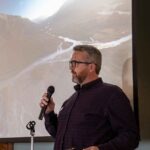
Dr. Mason Ducharme presents on behalf of Satsan (Herbert George) at the 2025 Indigenous Leadership Awards.

Website

Webpage
Celebrate this year’s awardees in a ceremony at the Redd on Salmon Street on October 15, 2025!
We warmly welcome friends, family, partners, and community members to join us at the Redd on Salmon Street for this special occasion.

Project Page
A celebration of the determination, wisdom, and continuum of Indigenous leadership across the region.