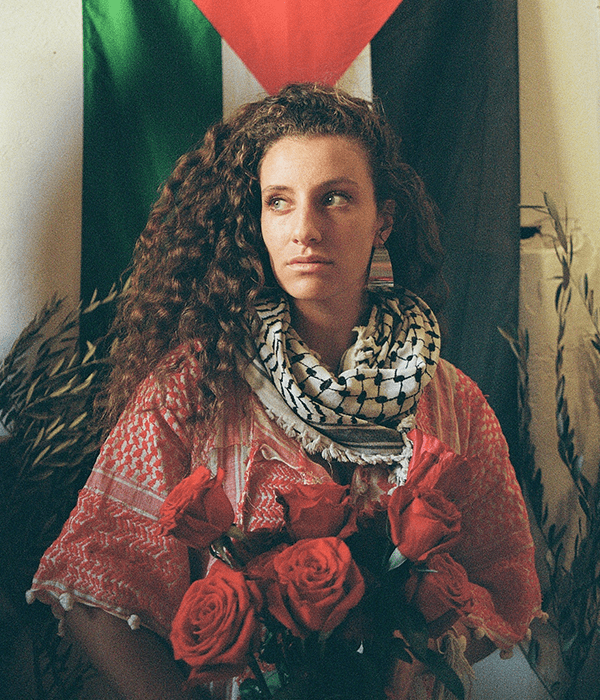
Alexandria “Zandi” Saleem (she/her) is a farmer and director of Flowers to the Folks, a program of the Feed’em Freedom Foundation, located at CROPS Farm in Troutdale, Ore. She is also one of the founding board members of Black Oregon Land Trust (BOLT) in Corbett, Oregon.
Last summer, Zandi spoke with community outreach coordinator Alisha Howard about how her family’s work in the wedding industry and local food sovereignty efforts have shaped her journey as a cut flower farmer, small business owner, and florist. All photos are courtesy of Zandi Saleem.
Tell us about what you do.
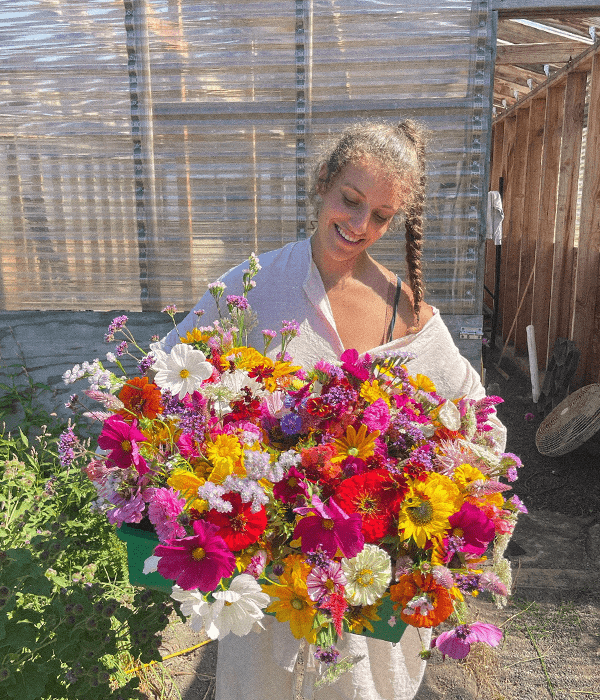
My primary focus with growing is flowers. I’ve had the absolute pleasure of being the flower farmer with Feed’em Freedom for almost four years. I came into farming wanting to learn how to grow vegetables and ended up learning how to grow flowers as a really important part of the ecosystems on the farm.
I focus on integrated pest management. The flowers bring in wonderful pollinators so that we can continue to have farm spaces that function with healthy ecosystems and don’t need to have pesticides.
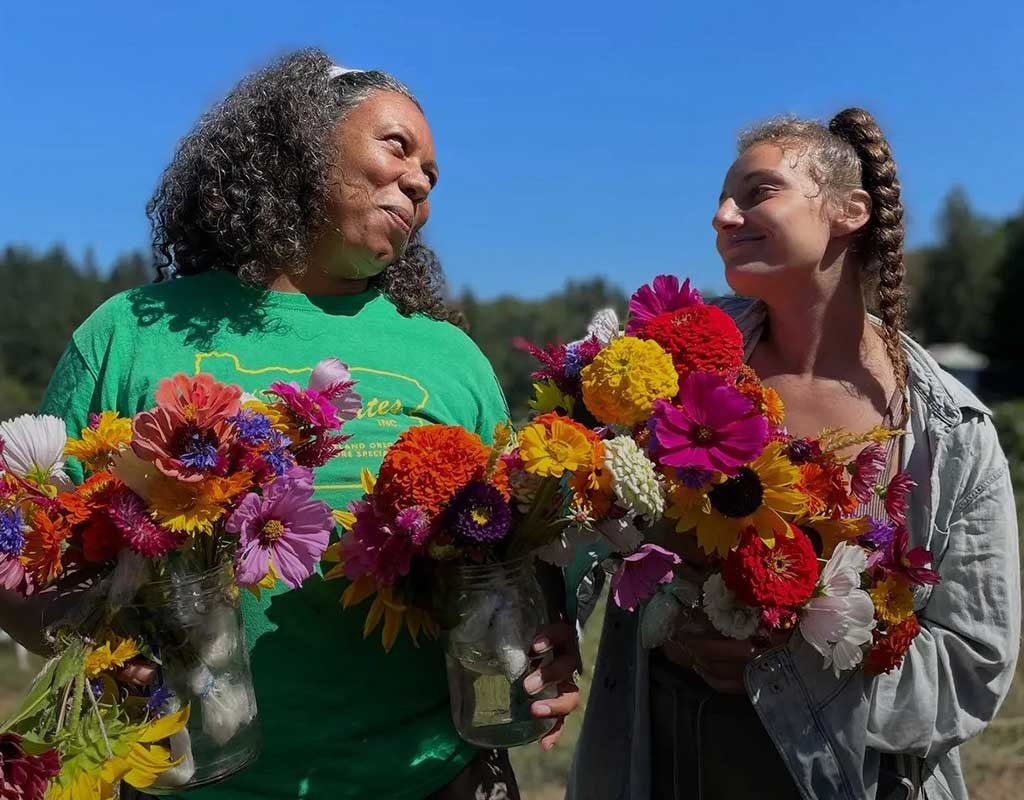
The dream of the Flowers to the Folks program was to be able to make flowers accessible, not just to spaces and the ecosystems on the farm, the joy and the health that it brings to a farm space, but also to have harvested flowers make it out into our communities.
Can you tell us about your relationship to flowers and farming?
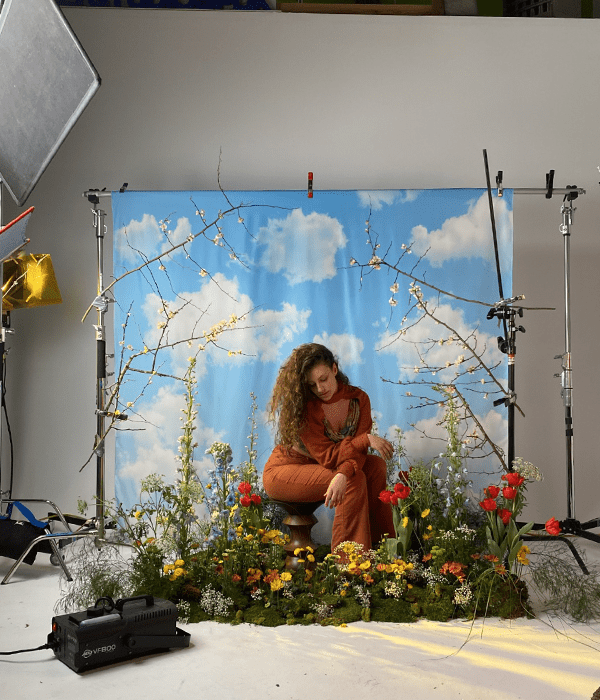
My mother is a florist, and my family—we all work in the wedding business, which can feel silly, but it’s actually a very beautiful ritual space to be in. My business with flowers is all very ritual based, whether it’s weddings or memorials or grief ceremonies. I began flower farming because of my knowledge of flowers in that way.
I started to volunteer with Art and Shantae at Mudbone Grown and learned how to grow vegetables. They were super supportive of me being able to come out and think about what it could look like to do work as a single mom and bring my kids with me. That’s part of what I like. Being a florist worked so well for the needs of my lifestyle.
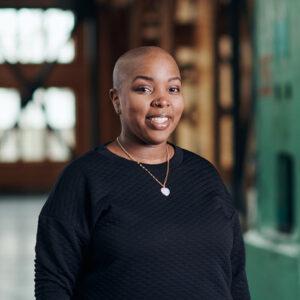
Shantae Johnson and Zandi Saleem
In thinking about the influences that you mentioned, your mother being a florist, I’m sure there were things you learned early on about the viability of a business. Are there any gems, wisdom, any teachings, lessons that you learned earlier being adjacent to your mother’s business?
I didn’t realize how valuable my mom’s knowledge in her floral business and me being a part of that business with her was—and how that transitioned into my ability to understand how flower farming becomes a business. My mentors knew how to grow flowers because they’d been doing it for a vegetable farm, but had no experience with bringing it to market. So, I brought a lot to the table, even having no farming experience. A lot of experience with the wholesale flower market. I can kind of ballpark pricing off the top of my head because I have to think about it when I’m making things for my business.
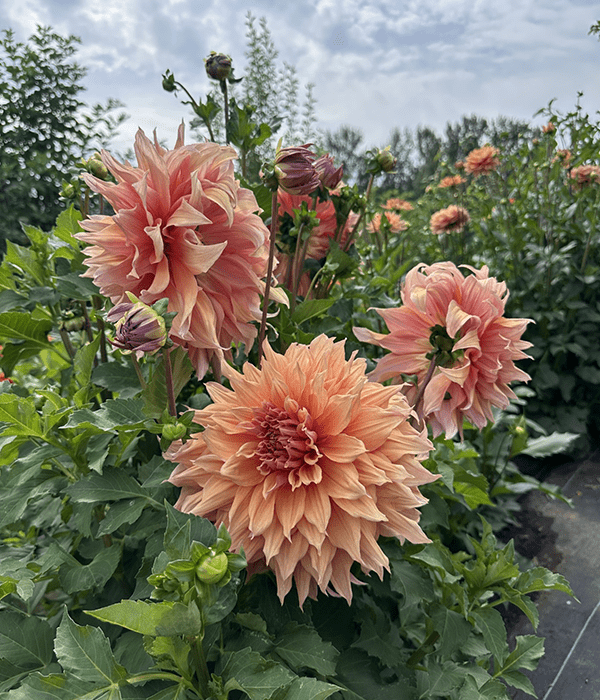
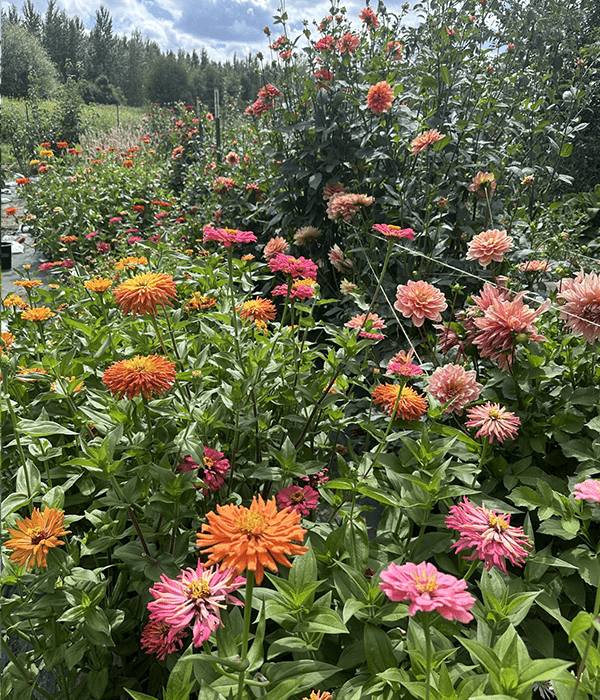
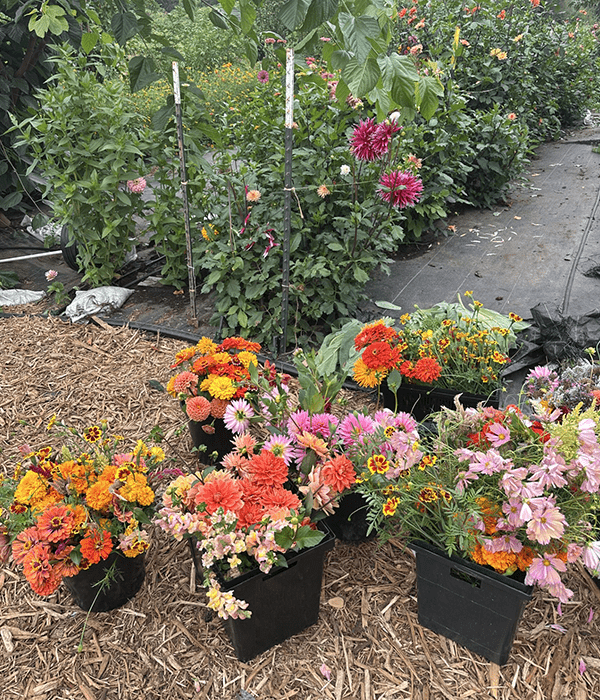
There’s certain flowers that are really difficult to grow. I’m thinking about dahlias in particular. I didn’t work with them the first two years because they’re like a whole other ballgame. People just farm dahlias or just farm roses. So I’ve been really interested in growing a wide variety of flowers, and because I love to work with them in bouquets, I think it gives so much more to the product if you have a wide variety. But I’ve learned that other flower farmers think about having less variety, but the ability to sell it for a longer, for a higher price with less work.
Is there an accomplishment or a moment of success that you’re thinking, yeah, I’m doing exactly what I’m supposed to be doing and it’s meeting the need that it was intended for?
I think there’s been a few moments this year that I really got to soak in the work that’s being done. Those moments have been where I can feel how my work as a florist and my work as a farmer come together to create something special, an offering that could only come from really understanding both things. In one of those moments, I got to work with a group of mostly Black women to produce the Black Educators of Oregon event for Juneteenth that was put on by the Oregon Community Foundation. I got to be the florist on that project, and I got to work with incredible producers and event designers who really focused on producing an event that also aligns with my mission as a farmer, giving folks their flowers while they are still here.
Even though it wasn’t happening through my Flowers to the Folks program, these people know about my work as a florist and like the way that I work to bring flowers into community. That’s part of why they valued me for that project. It was a different experience. I got to use a huge budget, which rarely gets to happen. For community projects, I always dream of having the budget to really give people their flowers, which is a huge mission of my work. I got to do that. These incredible Black education pioneers were being honored in this event, and we got to produce something that was so beautiful to celebrate that legacy.
And I got to use flowers from the farm and buy from other flower farmers. I always try to buy as local as possible. But yeah, that felt like a big moment to be like, “Okay, look at these multiple worlds converging to do the thing that is the mission of the work!” That felt really, really beautiful. I felt like I got to show the scale of the work that I’m able to produce, which often, the barrier is just the money to do it, not the skill. So that felt really exciting.
Are there any other folks who’ve been encouraging? Any other agencies that have supported either your business or your community program that you want to acknowledge and introduce people to essentially? Who do you want to give flowers to?
There was something special that happened this year where another farmer from Solstice Flower Works had given us a bunch of dahlias. They were closing up their farm. They’ve continuously been supporting the Black Oregon Land Trust because they were also farming up in Corbett. One farmer gave us what they had in excess, which are now at five different Black farm spaces, distributed through the Flowers to the Folks program. I passed them out to our network at our three different farm spaces with Feed’em Freedom and within the Black Agricultural Ecosystem we are a part of. It’s incredible to watch the generosity of one farmer closing down transition into supporting many others.
Every year I’ve had different farmers be like, “I have extra dahlias. I have extra seeds. I have extra plants.” I’ve spent no more than $100 on seeds every year because I’ve been saving my own seeds, giving seeds that I’ve saved to other people in community. If someone’s moving their farm, they’re like, “Do you want to come dig up hundreds of plants?” That’s what I did with Mariana of Corolla; that’s how we really connected. She’s now helping me learn about the plants I dug up from her farm two years ago, saved and planted at our farm. So really, this larger ecosystem serving the individual vision and project is so possible. And the only way, I think.
The Feed’em Freedom Foundation (FFF) is dedicated to fostering resilient food systems for Oregon communities by empowering Black agriculturists to lead and own our land stewardship, regional food security, and economic prosperity.