Since 2015, Local Link has been a critical program connecting buyers from institutions like schools and hospitals with local farms and food producers. Below, Program Manager of Food Systems Equity Raphael Guzman reflects on the importance of public school meals and how programs like Local Link are critical for supporting regional food sovereignty.
In November, the Redd on Salmon Street was abuzz with the seventh Local Link vendor fair. Generating a hum of activity and warmth, this gathering is a place for local farms and food producers to engage with the institutional buyers and distributors that move their products from farm to fork. More than a traditional vendor fair that often showcases new products of established companies for a wide audience and wider distribution, Local Link stands apart. Specifically developed to support holistic relationship development within the local ecosystem of farms, small food businesses, distribution hubs, and institutional purchasers in the Pacific Northwest, Local Link is known as an event and meeting place to engage with new entrepreneurs and foster relationships.
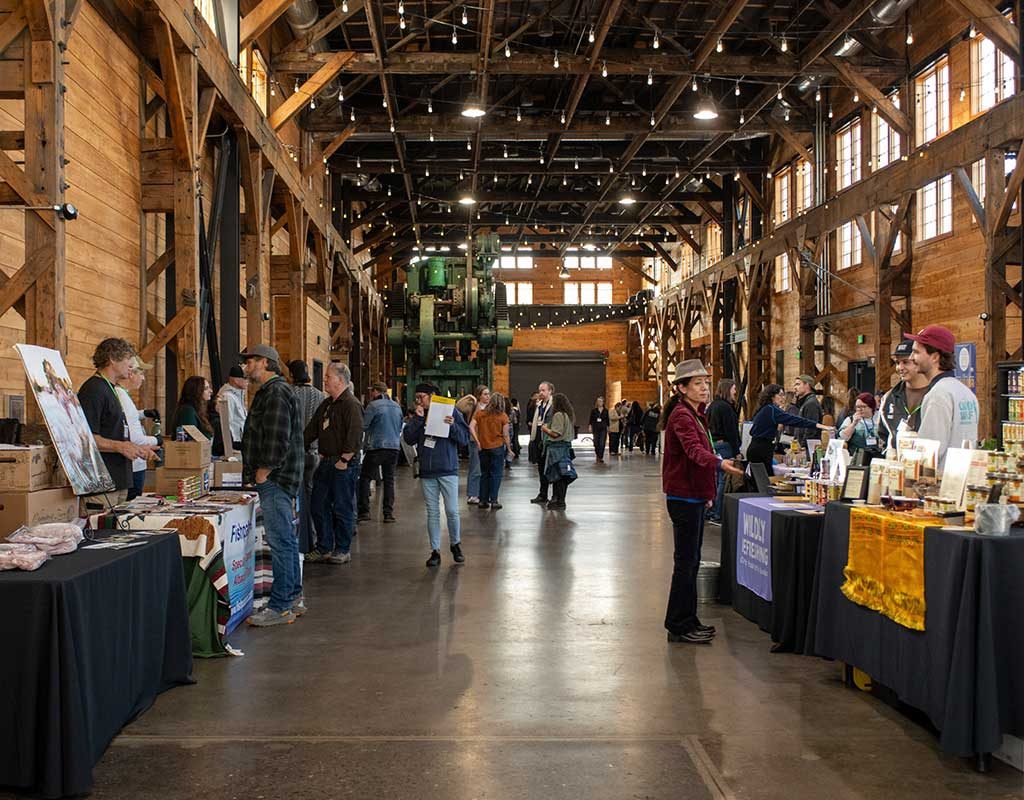
The vendors had a moment to connect with each other before attendees arrived at Local Link. Photo credit: FLI Social
As a member of the planning team, I moved through the crowd in the main hall of the Redd, clipboard in hand, and witnessed community partners, such as the Oregon Farm to Institution Collaborative, facilitating network connections with Neighborhood House Head Start and engaging resource hubs like the Oregon Farm to School Network. I found myself reflecting on the advances our local school systems have consciously chosen to not only offer local food as a part of lunch programs, with the support of initiatives like Oregon’s Farm to Child Nutrition Programs, but also incorporate options that are culturally relevant to their students. It’s these connections and shared values that have brought Salsas Locas tamales into Portland Public Schools.
Since 2015, Local Link has played an active and evolving role in the local foodscape: gathering hundreds of community food system leaders on crisp fall mornings for connection and strategy and, ultimately, moving strong purchasing dollars through the local economy. This year, the event was made possible by the specific public requests for its return, as a place to provide more opportunities for adaptive and actionable entrepreneurial growth in the local foodshed, and through the generative partnership of the Oregon Department of Agriculture.
“
…I talked to so many different people making new connections and inspiration for creative ideas. I really liked the set up and flow…the in person format, and the opportunity to connect with our local food systems.”
— Participant feedback via survey
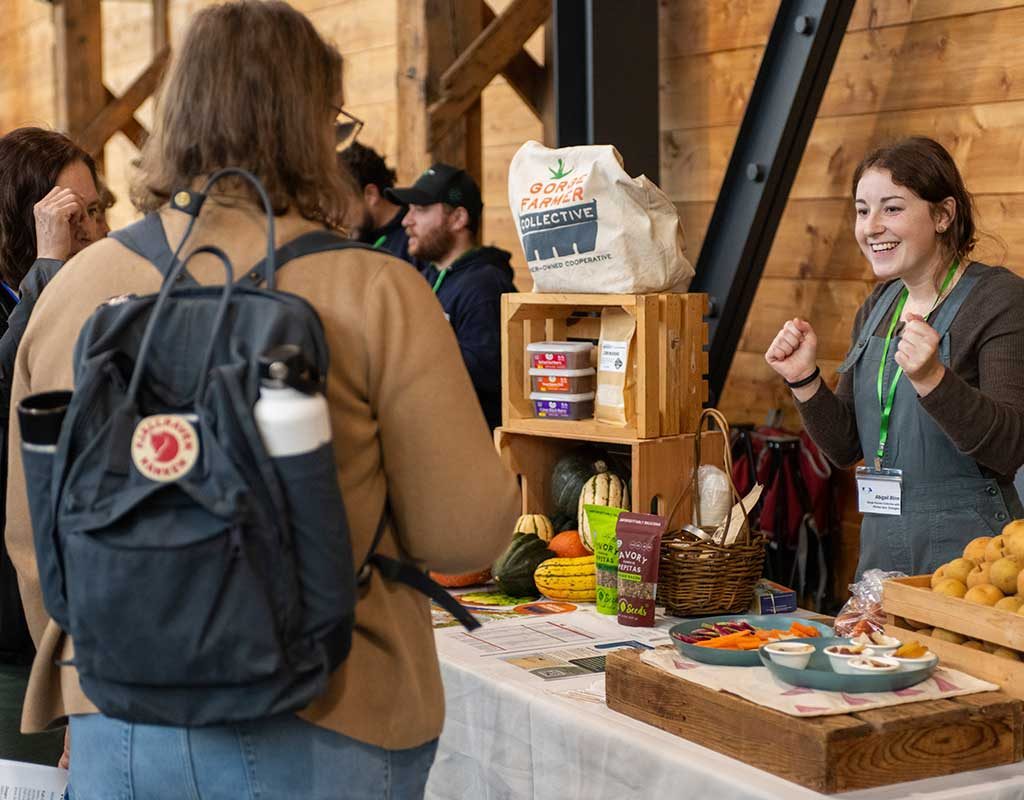
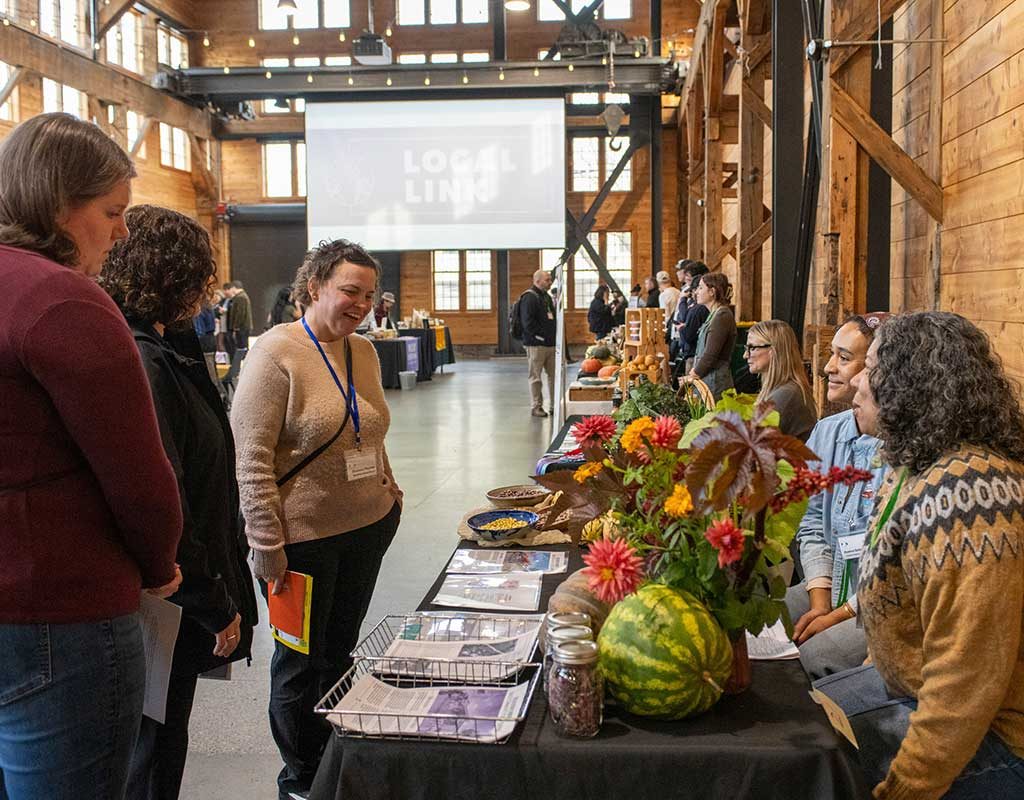
An attendee connects with Gorge Farmer Collective & Kitchen Sync Strategies. Photo credit: FLI Social
Farm to Fork as a Public Good
New to Local Link’s programming in 2025 was the addition of a Farmer Resource Fair. Informed by direct feedback, this fair featured the professional resources requested most from attendees of Resilient Food Futures events. Representatives from local grassroots organizations, educational services, and businesses showed up to provide information on land access, accounting, contracts, and more.
Though this may have been my first year working on the Local Link program, the activity and values of Local Link have long been mirrored in my work, on the Resilient Food Futures team, where I produce educational events for a growing network of farmers. I am grateful for gathering spaces like this, where I have the opportunity to listen deeply, learn, and incorporate feedback into my work.
Lately, much of this conversation has been about how the past year of mass governmental defunding for essential programs has impacted those most at risk in our communities. In this time of increasing unknowns in the global food market and diminished SNAP benefits, growth towards local food sovereignty is increasingly essential to many communities. For many, schools and early childhood programs are a key support system that offer those on the frontlines greater access to fresh, seasonal, local food through child nutrition programs.
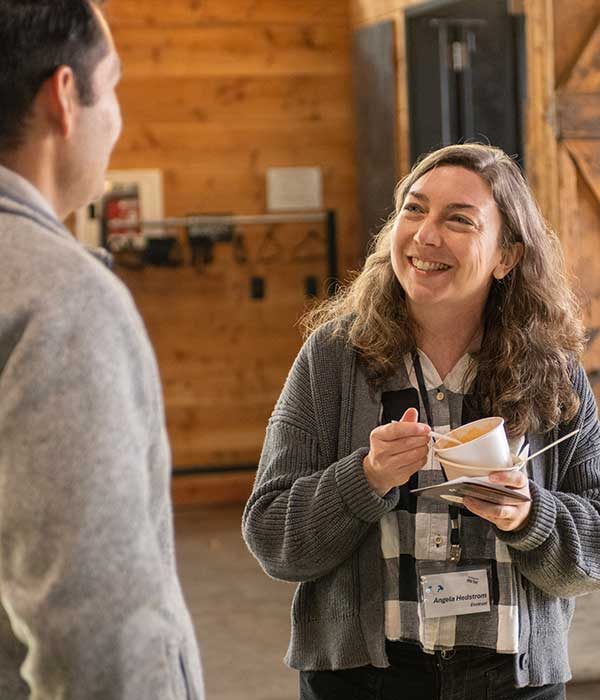
Angela McGregor Hedstrom, Director of Community Food Systems at Ecotrust, chats with a Local Link attendee. Photo credit: FLI Social
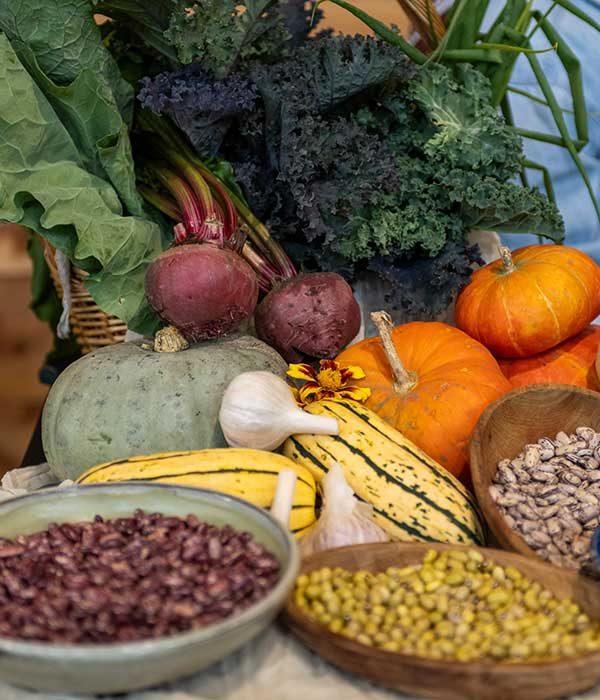
Basket of local produce featured at Feed’em Freedom Foundation’s table. Photo credit: FLI Social
School meals have long served as a cornerstone of the public food system. Almost a hundred years ago, during an era of widespread scarcity and economic instability, Franklin D. Roosevelt’s New Deal ratified the school lunch program for the country, offering a model for investing in the social well-being of place. With a bridge between farm and fork through institutional purchasing, local farmers were able to access a new market, and the future was fed.
These days, spaces like Local Link support the conversations and institutional purchasing decisions that are necessary to shift nutrition and local economies and cultivate belonging, learning, connection, and a sense of place.
Looking Ahead
As we continue to listen, we are resolved to stay nimble and adapt our work for the benefit of the communities we serve. Amid ongoing impacts and new unknowns for growers, we recognize that institutions have the opportunity to play a key and responsive role in the food system. As we adapt and grow in our role within a greater network of support, Ecotrust is committed to championing the emergent community-based priorities of our food system. We recognize the value of gatherings like Local Link offers, and we look forward to developing the spaces where we can foster learning and continue to strengthen the procurement pathways that support farmers, children, and the future of food resilience.
Feed’em Freedom Foundation was one of the many organizations tabling at Local Link. Photo credit: FLI Social
Bringing together a growing network committed to building thriving local economies, vibrant urban and rural communities, and equitable access to good food