Communications Manager
Community Outreach Coordinator
Randy Kiyokawa and daughter Rebecca.
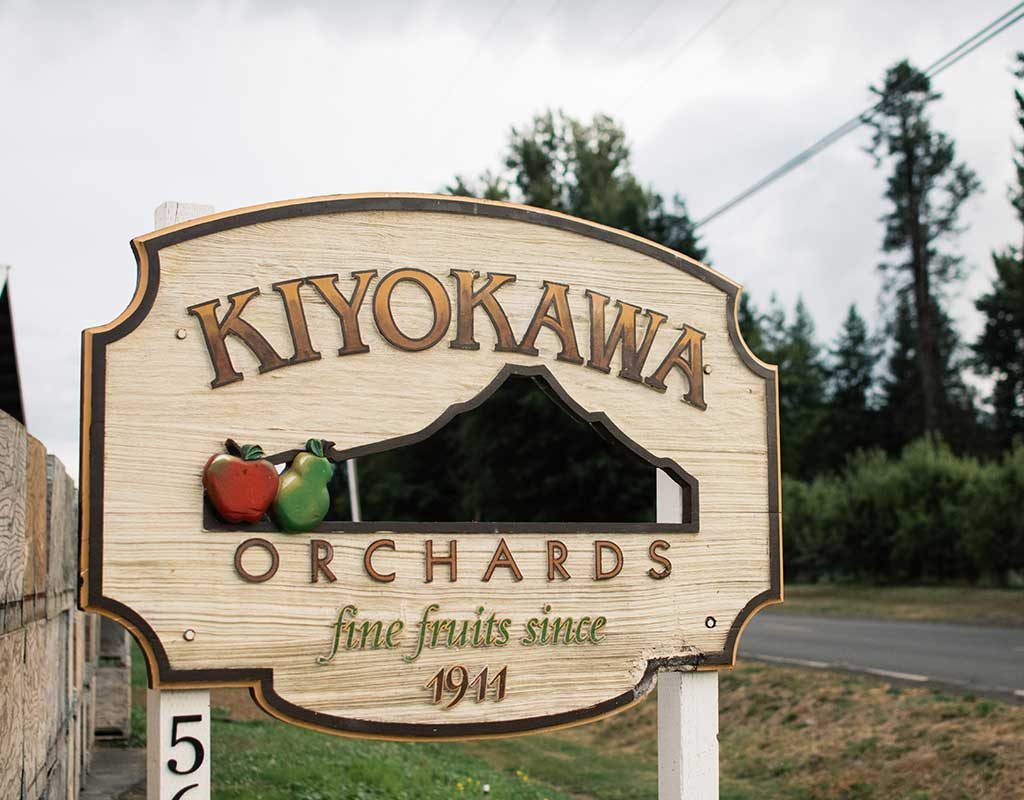
In Oregon’s fertile Hood River Valley, the Kiyokawa Family Orchard has been family-owned and operated since 1911. Familiar to many Portlanders, Kiyokawa offers a wide variety of apples, pears, stone fruits, and value-added products that can be found in Portland’s farmers markets, schools, and grocery stores, as well as markets abroad.
The 207-acre orchards are currently managed by its third-generation owner, Randy Kiyokawa, who—despite having many concurrent needs on his farm that morning—cheerfully agreed to be interviewed. As well, he invited his daughter Rebecca, who is poised to continue the orchard’s generational legacy.
All photos were taken by Emilie Chen.

Randy: My grandparents, on both my mom and dad’s side, migrated from Japan at the turn of the century. That brought my [paternal] grandfather [Riichi] through Hawai’i. And at that time Hawai’i wasn’t a state. He went there because that was as much money as he had. So he went there, cut sugar cane to make enough money to make the trip all the way to the United States. The San Francisco Fire [of 1906] … prevented him from going to San Francisco and took him to Sacramento instead. He worked in the railroads, like a lot of the Chinese immigrants before the Japanese immigrants. … Eventually he settled here in Oregon, in a small town called Dee.
My grandfather worked clearing land, and in exchange, he was able to start farming in 1911.
I don’t know if you’ve heard of the picture brides that was pre-arranged [marriage]? That’s when my grandmother Rei then came over. [Riichi and Rei] had five boys, three girls—a big family to do a lot of the labor. My grandfather grew the farm—It was very large at one point, over 300 acres. That property is still with the Kiyokawa [family]; my cousin owns it now.
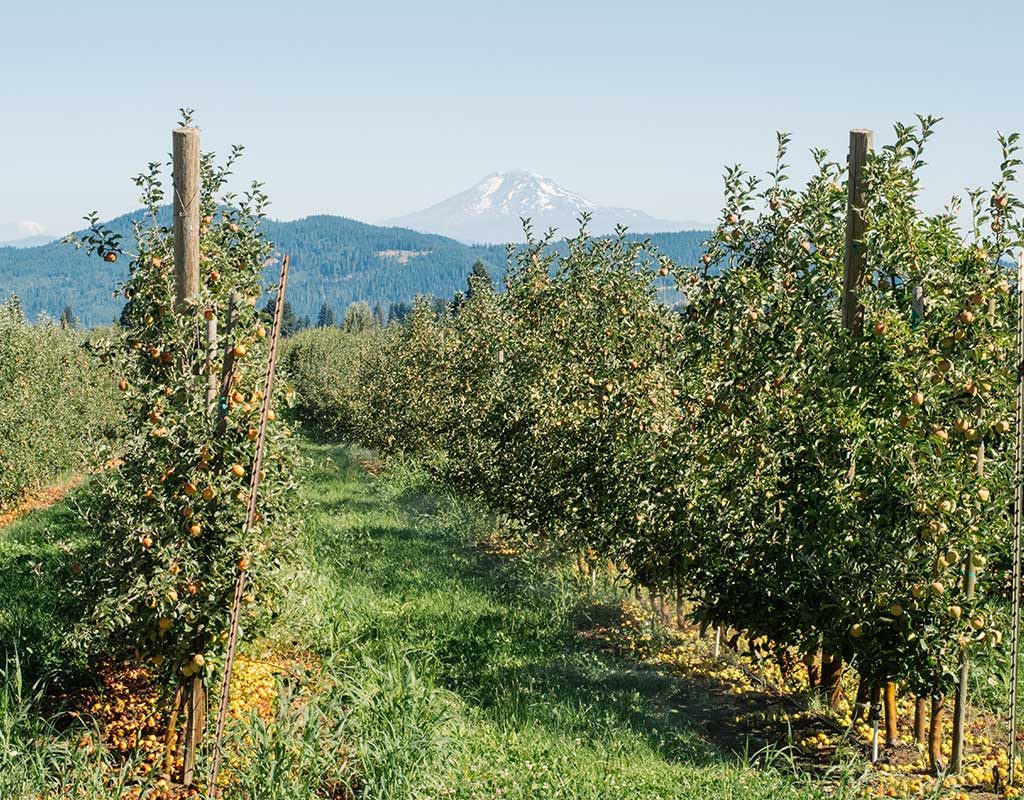
On clear days, the peak of Mount Adams can be seen to the north of the orchards.
Randy: Like in a lot of customs, the oldest son gets the farm. And my dad wasn’t the oldest. Dad—when he decided to come back after the internment [of people with Japanese ancestry in World War II], after serving in the military and working in Minnesota, Philadelphia—bought this place in 1951. I always tell people: I’m glad that my dad wasn’t the oldest, because Parkdale has a better view.
I have four older sisters, and [my parents] really wanted to have a boy. Back then it was, they had to have a son to take over the farm. Nowadays, we realize that women are just as good—if not better—farmers than guys. When I was younger, I knew I wanted to become either a policeman or a disc jockey. [But] I knew what my destination was going to be.
My grandfather was given the opportunity to start farming. My father was given the opportunity through the GI loan to start this farm. And I was given some great opportunities to expand it.
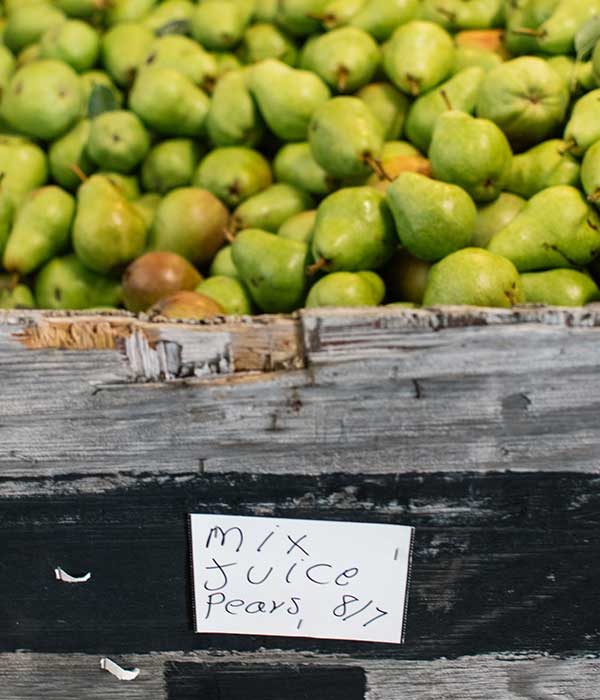
The main crop at Kiyokawa Family Orchards is pears, but many other fruits are grown as well.
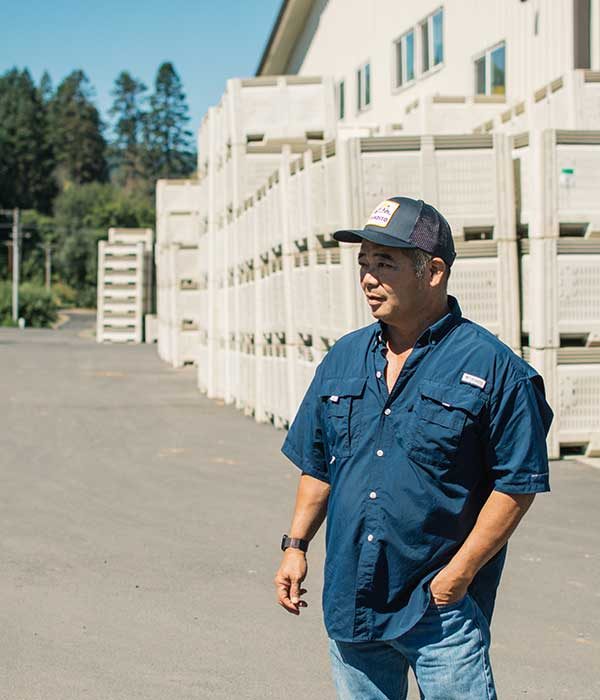
Randy offers his interviewers a tour of the Kiyokawa packing and storage facilities.
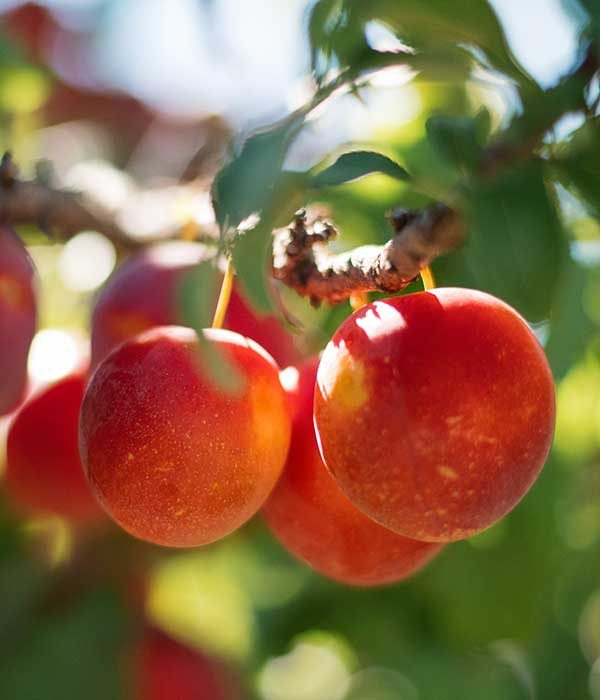
Pluerries—a cross between plum and cherry—are also grown at Kiyokawa Family Orchards.
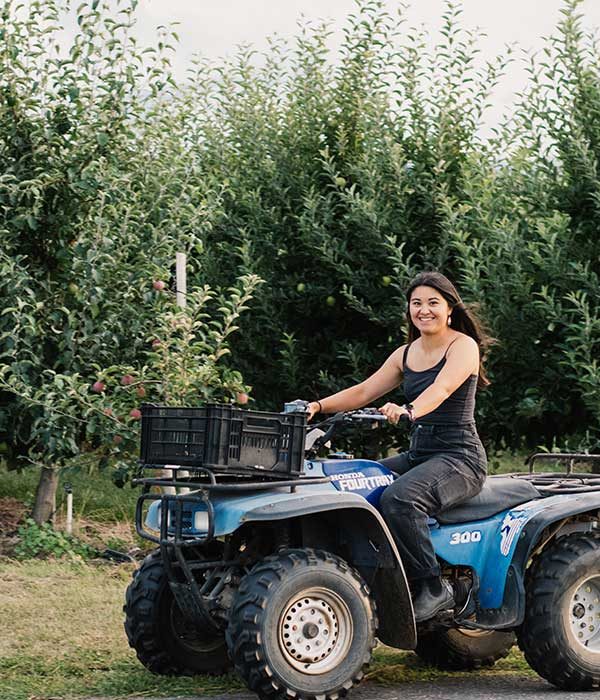
Rebecca drives a quad around the 207-acre orchard.
Randy: I would say, I am most blessed, most grateful that I have these great people around me, whether it’s family, whether it’s my employees, my wife, and all the other people that come out here.

Website