Connecting land stewards, traditional gatherers, agroforestry and partners across the Northwest to uphold Indigenous agroforestry practices by Indigenous communities
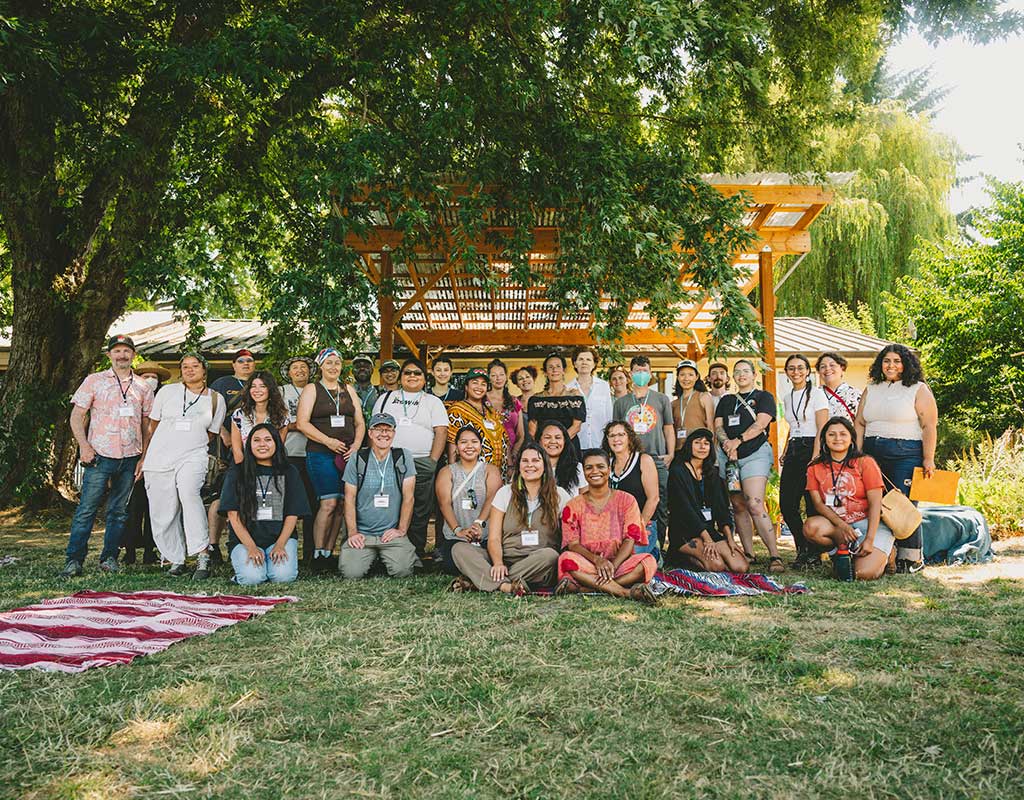
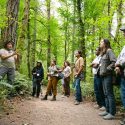
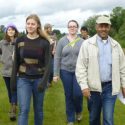
Attendees at the inaugural Indigenous Agroforestry Network Gathering on a field trip to the Wiyot Tribe’s newly acquired property, Mouralherwaqh. Photo credit: Daisy Autumn Photography
Indigenous land management practices are deeply holistic, shaped by thousands of years of experience and knowledge. Today, these knowledge systems continue to inform contemporary agroforestry practices, creating opportunities for integrated and sustainable land stewardship. However, Tribes and Indigenous practitioners often face barriers to accessing essential resources and support needed to steward their lands.
The Indigenous Agroforestry project and Indigenous Agroforestry Network support Indigenous-led agroforestry by fostering collaboration between Tribes, practitioners, and allied partners. Rooted in traditional land management practices, the project enhances access to resources and knowledge that bridge Indigenous stewardship with contemporary agroforestry.
accepting responses
Mapping Indigenous Agroforestry Systems
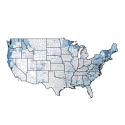
The Indigenous Agroforestry Network is gathering information to create a living database of Indigenous-led or Indigenous-serving agroforestry projects across Oregon, Washington, and California. This effort will highlight the diversity of agroforestry practices and approaches Tribes and Indigenous peoples are using to steward and care for lands, waters, and communities.
We invite you to share information about your Indigenous-led or Indigenous-serving agroforestry project so that it can be included in the database.
Building an Indigenous Agroforestry Network to connect practitioners in the Northwest and beyond.
Conducting landscape and needs assessments to identify priorities and expand access to agroforestry-related resources.
Conducting landscape and needs assessments to identify gaps in technology and tools used for forest management and Indigenous agroforestry practices.
Our work builds on momentum from the 2021 Indigenous Agroforestry webinar series, leading to the creation of the Pacific Northwest Tribal Agroforestry StoryMap, an educational resource on Indigenous land stewardship.
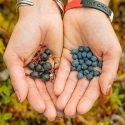
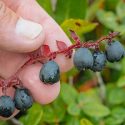
Examples of Indigenous land management practices that align with agroforestry definitions may include the tending and pruning of wild huckleberry bushes, cultural burning to support basket weaving materials, planting medicinal and cultural shrubs and trees along riparian zones for migrating salmon or managing oak woodlands to support acorn production, which feeds both tribal communities and wildlife.
The Hoopa Valley Tribal Forestry Department under the direction of the Hoopa Valley Tribal Council is responsible for the management of over 87,000 acres of timberland, containing an abundance of commercial and cultural resources.
INC is a USDA Forest Service managed, tribally guided, organization for advancing the interests of native peoples involved with plant production in nurseries.
The USFS Pacific SW Fire and Fuel program researches decision-support models that analyze risk, resource allocation economics, and fire danger forecasting.
The Research and Development arm of the Forest Service is a component of the USDA, working at the forefront of science to improve the nation’s forests and grasslands.
Heritage University is a nonprofit, independent, non-denominational, accredited institution of higher education offering undergraduate and graduate education within Yakama Nation homelands.
Build and deliver mission-aligned projects in partnership: Large group facilitation, Developing ideas into programs, Affected people/community analysis, Program evaluation & reporting
Contribute tools, analyses, and frameworks that move projects forward: Decision-support tools
Quarterly Webinars
Join us each quarter for a free webinar that is designed to foster connection among agroforestry practitioners and partners, while increasing awareness of programs and services available to Tribes and Indigenous land stewards. View our archive of recorded past webinars, including links shared by participants, and register for upcoming webinars.
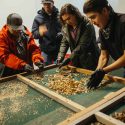
The Indigenous Agroforestry Network Gathering Partnership Workshops were held in August 2025 in Portland, Ore. The three-day event welcomed nearly 200 in-person and virtual participants to foster connections, share traditional knowledge, and uplift Indigenous agroforestry practices.
In May of 2021, the Oregon State University College of Forestry hosted a webinar presented by Dr. Frank K. Lake, USDA Forest Service Research Ecologist. The event shared ideas and examples of how Tribal land, resource stewardship, and agroforestry practices relate to one another, and was part of a broader effort to promote knowledge sharing and network development. To continue that goal of learning and connection, that webinar has been translated into this StoryMap.
Investment in agroforestry — an ancient land management method that integrates the growth of trees with crops or livestock — is emerging with renewed fervor across the U.S.
The Pacific Northwest (PNW) Agroforestry Working Group was formed in May 2013 to assess the current status of PNW agroforestry education, research, and outreach activities.