A recipient of $5M in New Markets Tax Credits from Ecotrust CDE, the White Center HUB offers a case study in community leadership toward equitable development. As the acronym HUB denotes, the project is already building hope, unity, and belonging for a community that has long been resilient in the face of historic disinvestment.
The White Center HUB is more than a community center or an urban development project. More than 20 years in the making, it’s the physical outcome of deep engagement, listening, and intentional place making. And it stands as proof that community-based organizations can lead complex development projects with resources and support that are able to match their vision.
The community of White Center is in unincorporated King County in Washington state. Despite having a similar (or higher) population density compared to nearby cities in the greater Seattle area, as one of the few unincorporated communities in the region, it doesn’t receive the same levels of investment. As Aaron Garcia, Executive Director of White Center Community Development Association (CDA), explains it, “We typically get the kind of services and support that a rural area would get. But when you look at the density and the population that we have, you start to see very unfortunate outcomes. We’ve always taken care of each other, and part of the reason why is that we have to.”
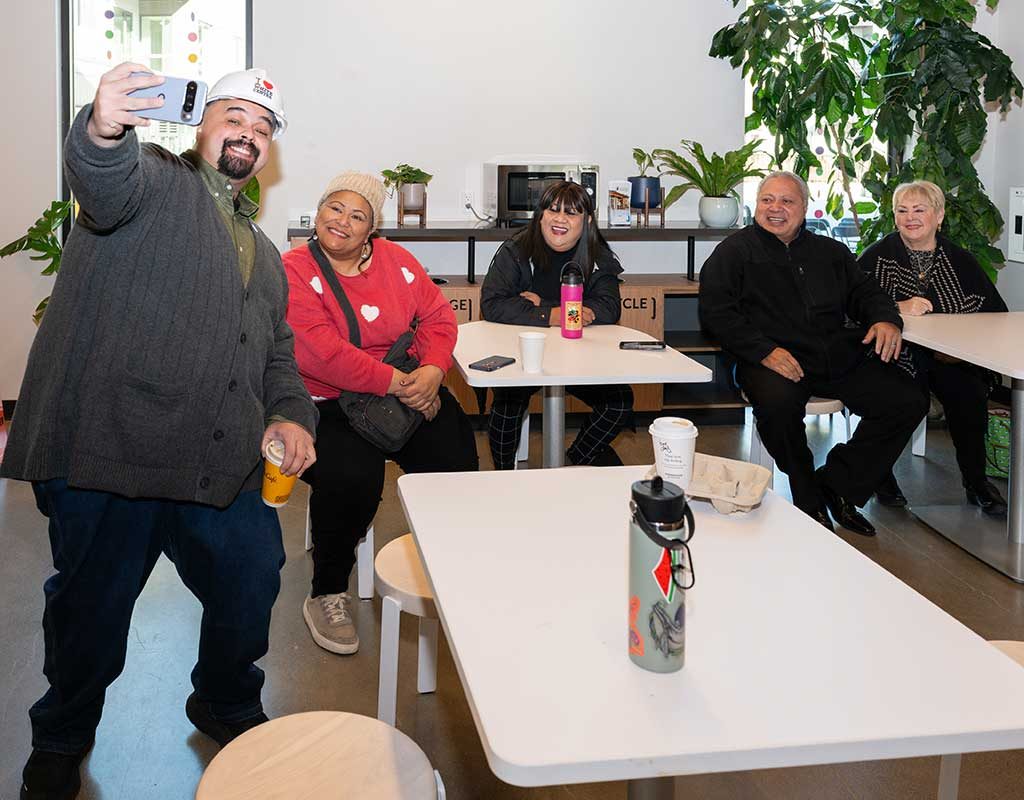
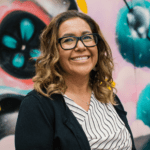
Aaron Garcia poses for a selfie on ahead of the White Center Community HUB ribbon-cutting celebration. Photo credit: Mel Ponder
For White Center CDA, community rootedness is critical to their strategic approach. They employ a team where roughly 80 percent are from White Center or have direct lived experience in the community. They went to school, work, pray, eat, and live there. And that deep local knowledge translated into tangible project outcomes for the White Center HUB.
“We figured out how to source it, how to fund it, how to navigate the system. We take a lot of ownership in this project because historically it’s been outsiders coming in,” Aaron said.
For example, during the planning phase, community members repeatedly asked for dental services, but development partners pushed back: Accommodating the needs of a dental office is more expensive, requires specialized build-out, creates structural complications. “At one point they were like, well, we’ll just bring a mobile bus here every once in a while (to offer dental services),” Garcia remembers. “It’s like, no, that’s not what the community wants.”
White Center CDA insisted. They made the ceiling heights work, figured out how to structurally support three dental chairs, and absorbed the additional costs. The result? Dental services are now one of the biggest service draws at the facility.
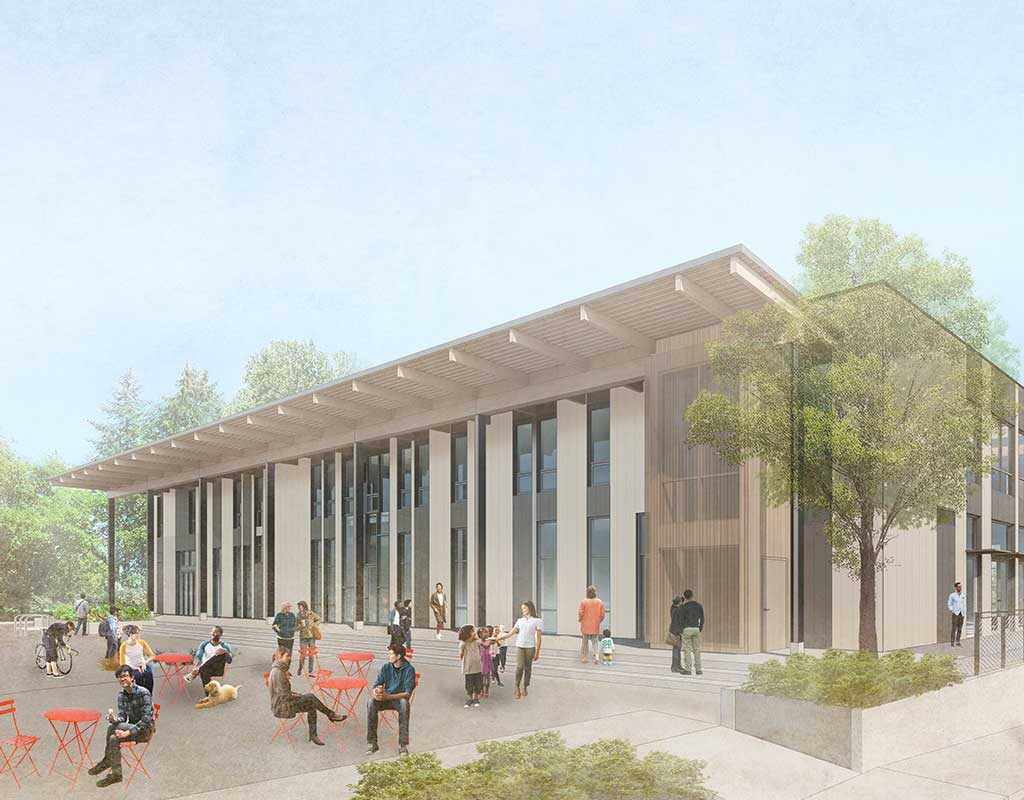
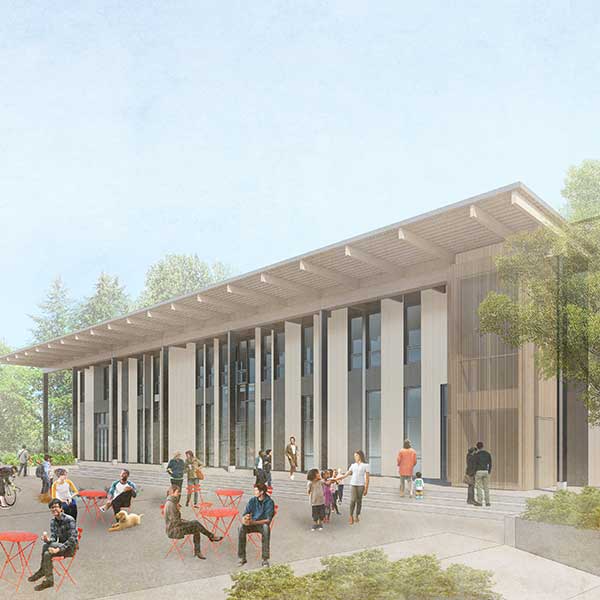
An architectural rendering of the White Center HUB plaza. Image courtesy of Side x Side Architects
In addition to health services, the White Center HUB campus includes 66 affordable housing units, workforce development and educational programming, event space, and more. Because of its multiple objectives, the project’s financing required creative thinking and a variety of funding sources, including public-private partnerships, a unique capital campaign, and New Markets Tax Credits. Across each effort, building authentic relationships and staying hyper-focused on community-level goals reduced risk and created better outcomes.
Eight years ago, White Center CDA joined the Communities of Opportunity partnership, a public-private collaboration between King County and Seattle Foundation that provided flexible pre-development resources and helped identify a co-developer.
“Part of the reason why bigger developers can control the work is because they have access to resources to help with underwriting and get things launched,” Aaron explained.
“Communities of Opportunity helped us plant the seed and figure out all the steps of this development journey. And even though we were almost volun-told who our co-developer would be, I think they were the right partners for this project, and we were able to develop a very honest relationship with them. I think that’s super unique because community-based orgs usually get subjugated to this tokenizing role. From the get-go, we made it very clear that this is our project. We know we don’t have the capacity to do this on our own, but we’re the leaders.”
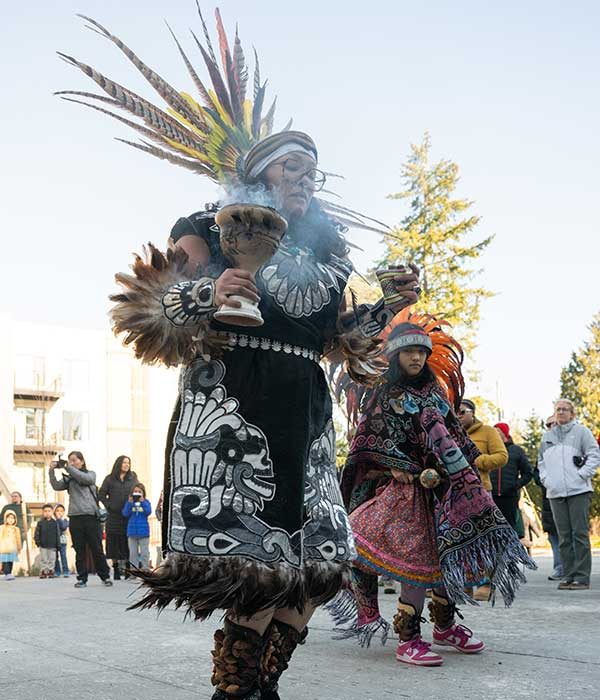
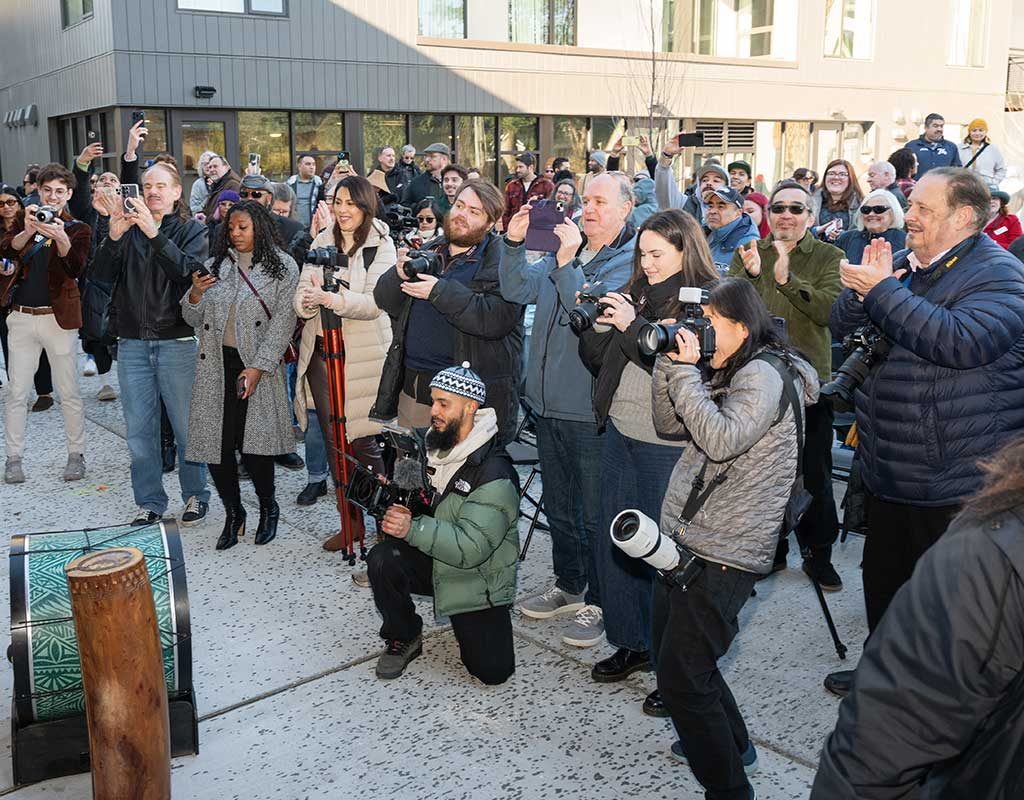
The White Center HUB ribbon cutting included performances by a variety of community dance troupes. Photo credit: Mel Ponder
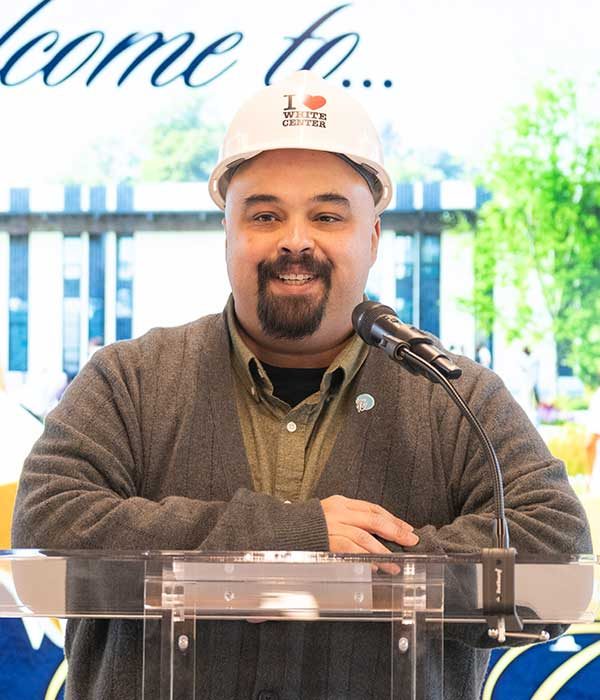
White Center CDE Executive Director Aaron Garcia speaking at the White Center HUB opening celebration. Photo credit: Mel Ponder
With a more fleshed out plan in place, the White Center CDA team began fundraising. While typical capital campaign models serve a single project, White Center CDA participated in a unique joint campaign called “Rise Together” with three other community-led organizations: GenPride, which is focused on providing LGBTQ+ elder housing; AfricaTown’s Liberty Bank project; and the renovation of a 110 year-old fire station that now houses community services provided by Byrd Barr Place. Together, they raised $40 million for 400 homes across the region, a dramatic increase from their original $10 million goal and a reflection of the rise in development costs during and after the pandemic.
“Instead of us being in competition with each other, we were able to go out to funders, lenders, you name it, and really leverage the partnership and the bigger picture goal,” Aaron said. As partners sought funding toward a shared vision, Aaron recalls there were some tense moments, but the challenges were worth it—both for deepening regional partnerships and benefiting communities. “Instead of us being silent and having those moments, we were together working through that funkiness. And all four projects got delivered. That was a really dope experience.”
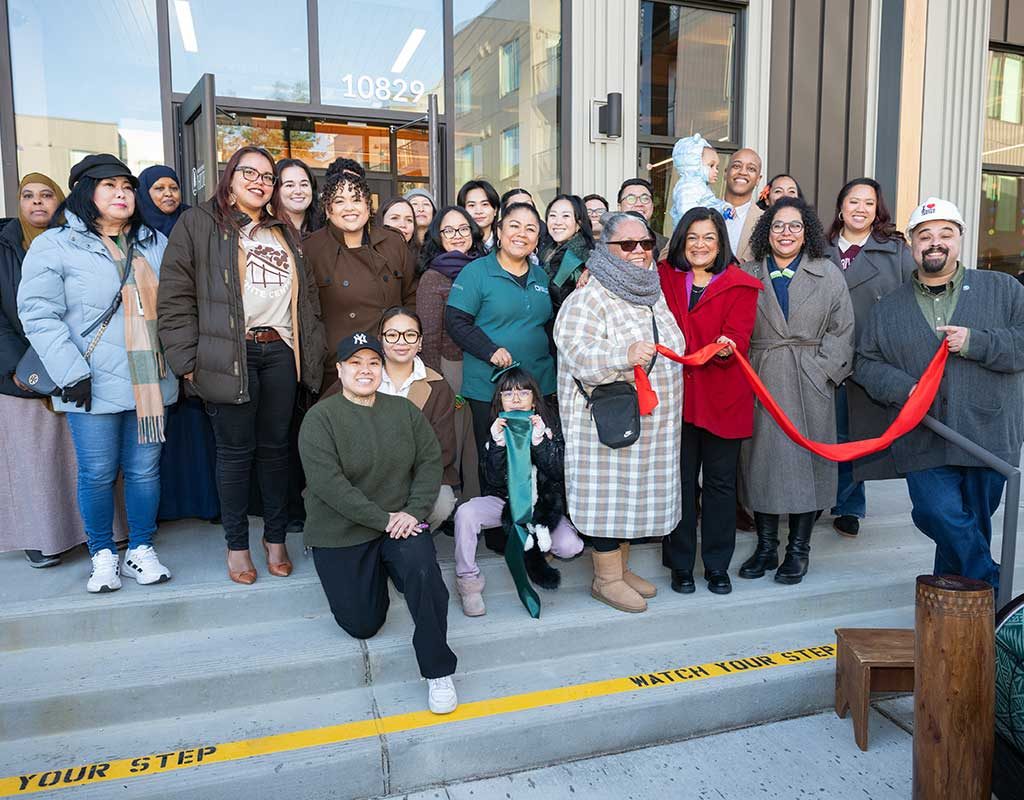
White Center CDE staff and partners gather for a group photo following the ribbon cutting ceremony outside the White Center HUB. Photo credit: Mel Ponder
As part of this diversified funding strategy, New Markets Tax Credits became a critical tool for bringing the capital stack to completion. It also brought a new set of challenges, revealing a fundamental disconnect between community realities and traditional development finance. “The way that the investors approach risk versus what I think is the reality is just so disconnected,” Aaron reflected. “I always remember when we were having these meetings with the attorneys and I’m like, we’ve already fundraised like 90 percent of this, and there are all these terms that the lenders want to dictate. And I’m like, what’s so risky here?”
This is where the right partners become critical. And a critical partner in helping White Center CDA navigate the intricacies of this federal program was Allison Page, their New Markets Tax Credit consultant.
“There weren’t a lot of folks in the New Markets Tax Credit consulting world that looked like us, that speak like us, that have lived experience like us. So we had to trust somebody that we might otherwise be like, ‘I don’t know if they’re going to get it,’” Aaron said. “Allison Page gets it. She actually put in the work and the time to be in community with us.”
“
What makes White Center special is the pride of where we live.”
Ranny Nguyen, CDA Executive Assistant, White Center
This is a key piece of advice Aaron would extend to other community-based organizations who pursue New Markets Tax Credit funding: find consultants and advisors who will truly advocate for you. “We’re honest about the work that we do and that makes people uncomfortable. And if your consultant is uncomfortable, then they’re not willing to advocate for you,” Aaron said.
“Find somebody who’s aligned with your values and is willing to sit through some of those uncomfortable conversations. When it’s all said and done, it can be an amazing funding source that brings your project home. Without it, we would have basically shaved off a whole floor of our project.
Fundamentally, this credit exists because of the people, right? Like this is our credit. The wealth it generates belongs to us. And even though there are all these corporations that control it, it’s our wealth and it’s being returned to us like it should.”
White Center CDE staff and partners gather for a group photo following the ribbon cutting ceremony outside the White Center HUB. Photo credit: Mel Ponder
The wealth of community was on full display earlier in January, when White Center HUB held its official ribbon cutting, welcoming nearly 500 people across two days to celebrate their collective achievement.
“What makes White Center special is the pride of where we live,” said Ranny Nguyen, White Center CDA’s Executive Assistant. “We know where it came from, what it looked like before, and we really want to invest in what makes a community great. We want it to do better. White Center deserves nice things.”
A nonprofit that connects people and places to build community. The WCCDA works to eradicate poverty and build a vibrant economically diverse community.
The YES! Foundation of White Center serves children, youth and young adults through relationship based programs that foster self and social awareness, promote education and repurpose power in an under resourced community.
Canopy offers high-quality, affordable housing in White Center. Surrounded by health and community service providers, it’s designed to help households of all sizes learn, grow, and belong.
We believe in quality places to live for people from all walks of life. We develop and manage affordable homes for over 2,400 residents across the Seattle area. We offer affordable homes in 43 buildings close to schools, jobs, and transit so families and individuals can set down roots and thrive.
NMTC Transaction Details
Organization
White Center Community Development Association
Total cost of the project
$31.5MM
Use of Funds
Construction of a 25,000sf building: The White Center Community HUB
The White Center HUB is a place of learning, sharing, and community connection. Created by and for White Center, it is a space where efforts to build a more resilient and thriving neighborhood are centered.
Mobilizing New Markets Tax Credits for projects that strengthen climate resilience, intergenerational wealth-building, and lands and waters stewardship.