Earlier this month, Jon Bonkoski, Vice President of Coastal Communities & Fisheries, traveled to Haines, Alaska to attend the inaugural Chilkat Biodiversity Forum with our Alaska-based team members. Taking place in the ecologically and culturally significant Chilkat Valley watershed, the forum brought together many community members to plan for its protections.
The first time I visited the Chilkat Valley in southeast Alaska, the land spoke before the people did. I arrived by boat, taking the ferry from Juneau in the quiet gray of early June. As we motored north up the Lynn Canal, the water was a mirror, broken only by the occasional spray of a humpback whale or the silhouette of a harbor seal pupping on the rocky shores of Eldred Rock. When the Chilkat Mountains finally emerged, rising from the depths and vanishing into the clouds, I was struck by a singular, humbling thought: How does a place like this exist?
I found myself thinking of the Tlingit people who first navigated these waters. To arrive here is to feel the weight of deep time and the immense responsibility of stewardship.
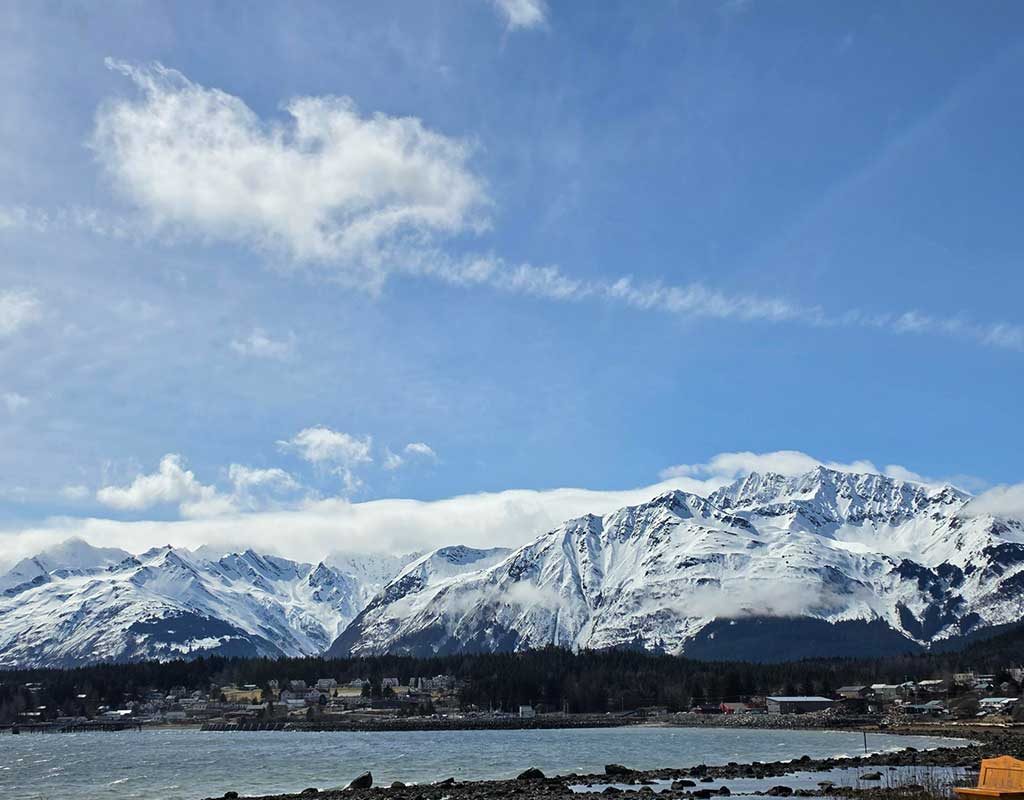
The community of Haines, Alaska. Photo credit: Jon Bonkoski
I originally came to Haines to support the impactful food systems work being led by my team and our local partners. From the moment I stepped off the boat, I was met with a level of kindness and generosity that defines this community. Staying in the home of a partner, I could feel the profound connection the people here have for the land, the water, and the non-human family members that comprise this region’s rich tapestry of life.
Fast forward two years, and that initial sense of wonder has matured into a collective mission. I’m just coming off the heels of co-developing and hosting the first Chilkat Valley Biodiversity Forum, and the message that resonates most is simple yet urgent: This valley is vital for everyone, and we must act to preserve its unique qualities.
The Chilkat watershed is not just a scenic backdrop; it is a globally significant biological corridor. Its unique biogeography featuring low, north-south mountain passes between the coast and the interior has served as a highway for migration, evolution, and adaptation for millennia. It truly is a land of superlatives. The botanical wealth boasts the greatest vascular plant and tree community diversity in all of Alaska. The valley also hosts the largest gathering of Bald Eagles in North America, and it is home to 39 known mammal species, including wolverine, lynx, moose, and both brown and black bears. As our climate continues to shift, the Chilkat Valley stands as a critical landscape for biodiversity.
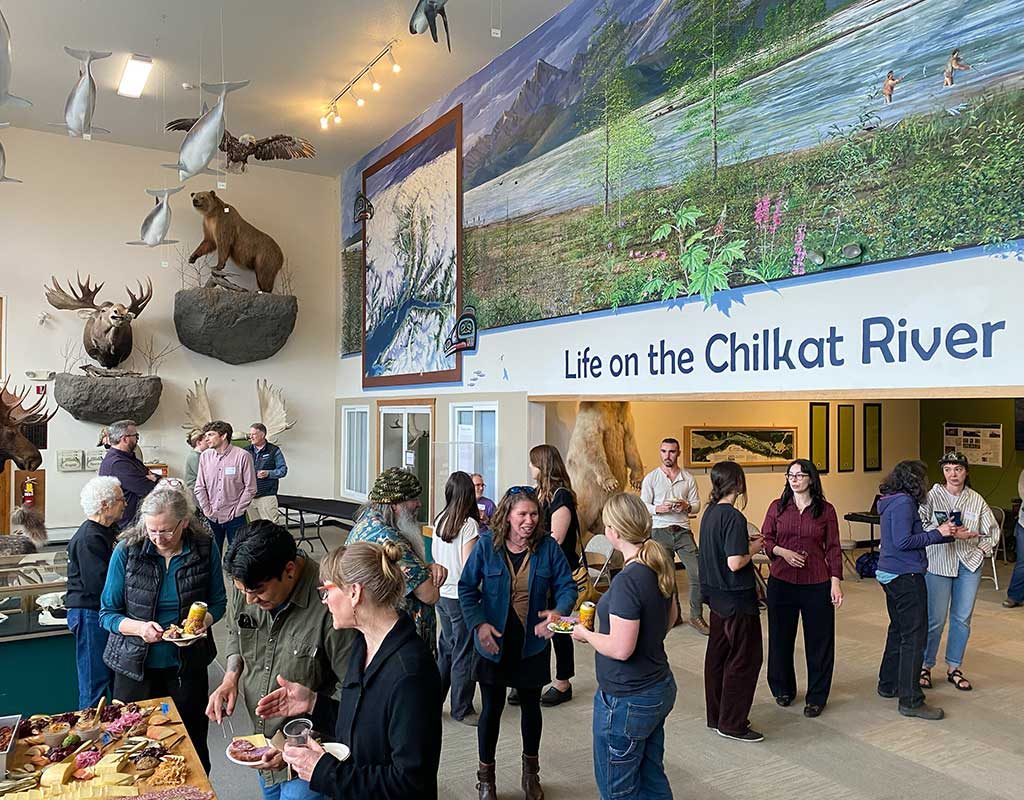
The Chilkat Biodiversity Forum convened experts, locals, and naturalists. Photo credit: Erika Merklin
The goal of the Forum was to bring researchers, community scientists, and knowledge holders together to fill the gaps in our collective understanding. By recognizing the watershed for its unique significance, we can better advocate for its long-term protection and sustainable management. I believe we achieved that goal, laying a solid, community-centric foundation of trust and collaboration.
As I reflect on our time together, I find myself returning to one of Ecotrust’s core values: driving radical, practical change. A concept discussed at the forum that embodies this ethos is the creation of a biocultural or stewardship credit. We had the privilege of hearing about these frameworks from Tatum Askew of the Simon Fraser University Action on Climate Team and Salmon Returns. Her work is at the forefront of conservation finance, bridging the gap between theoretical frameworks and on-the-ground ecological and cultural regeneration.
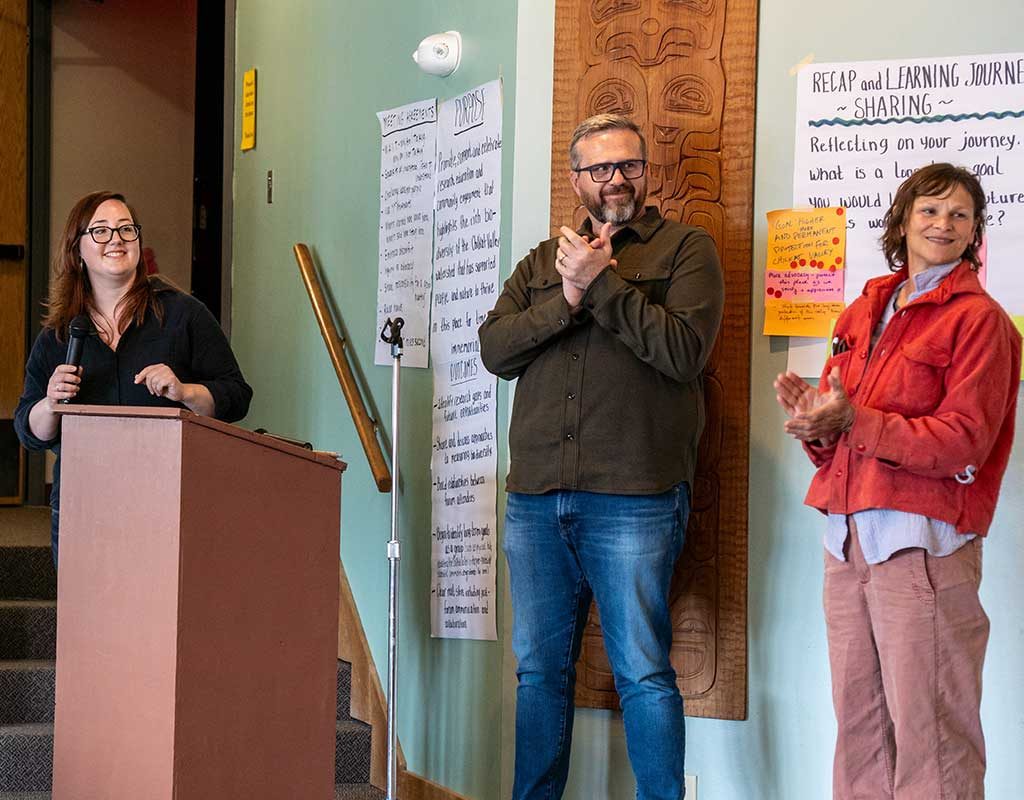
Ecotrust team members, from left to right: Meghan Stangeland, Jon Bonkoski, Erika Merklin. Photo credit: Ryan Morse; courtesy of Alaska Venture Fund
What makes these credits both radical and practical is that they reject the traditional corporate offset model. Instead of allowing buyers to justify environmental harm elsewhere, a stewardship or biocultural credit is a place-based financial instrument that represents a verified unit of actual regeneration. Co-designed, governed, and validated by Indigenous Nations and local communities, these credits blend traditional knowledge with western science to measure holistic outcomes across a watershed. Progress is tracked through deeply meaningful metrics such as habitat restoration, climate resilience, and cultural continuity. By attracting philanthropic, impact, and nature-positive corporate capital, this framework fundamentally transforms finance into a tool for reciprocity, channeling funding directly back into local stewardship, ceremony, and community-led enterprises.
The conversation that followed this presentation was incredibly inspiring because it revealed a powerful truth: so many of the pieces needed to build a stewardship or biocultural credit already exist in the Chilkat Valley. There is an undeniable magic to this place—a deeply rooted regional identity backed by active, sovereign Tribes and a dedicated network of committed partners. If we activate this collective to serve as the infrastructure to lift this model off the ground, the path forward becomes clear.
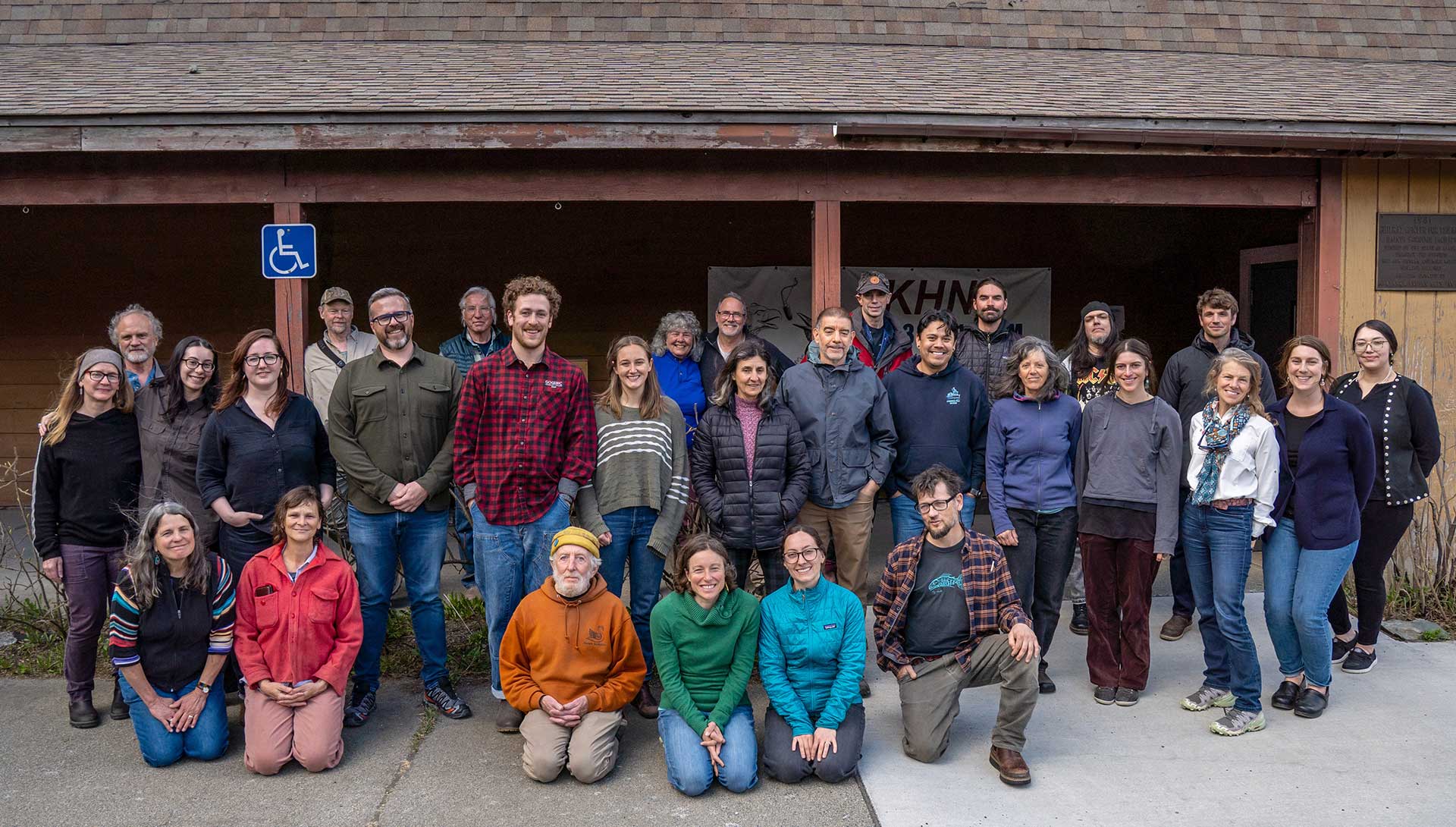
A group photo of the forum attendees. Photo credit: Ryan Morse; courtesy of Alaska Venture Fund
From my perspective, the critical next step—and where Ecotrust is deeply focused—is in building the interstitium, the connective tissue that helps mobilize these innovations and capital. Over our history, we’ve found that true systemic change happens when you build trusted relationships that bridge the gap between high-level strategy and local agency. By centering these connections, we can transform isolated restoration projects into a cohesive, participatory ecosystem. We are moving beyond the legacy of natural resource extraction to design an economy rooted in the Triple Bottom Line, where community health, cultural wealth, and ecological resilience are measured together.
Ultimately, I cannot think of anything more radical or practical than fostering the connective tissue needed to mobilize these innovations. By co-creating a stewardship or biocultural credit here in the Chilkat Valley, we can redirect meaningful capital back into the watershed ensuring the restoration, protection, and vibrant continuation of its world-class biodiversity.