Community Food Systems Coordinator
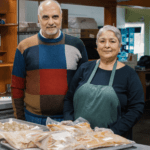
The Neighborhood House Head Start team.
The five Oregon-based teams of the inaugural Farm to ECE Institute cohort gathered at Leach Botanical Garden for a day of team time and restoration through forest bathing activities.
All photos are by Jason Hill.

In the morning quiet at Leach Botanical Garden in Portland, Ore., the gentle chatter of early childhood staff and their footsteps on the forest path intermingled with birdsong and the burble of Johnson Creek. Facilitator Bea Yeh from Luminous Together led the group through a slow-walking practice that invites participants to tune in to their senses as a way to settle the thinking mind. As staff slowly meandered the garden trails, a few stopped to marvel at the beauty of the blooming flowers on the side of the path and appreciate the beauty of the garden’s lush spring abundance together.
The early childhood staff gathered at Leach Botanical Garden for a one-day retreat as part of their second year in the Farm to Early Care and Education (ECE) Institute. The retreat provides time for restoration in the botanical garden, connection with nature, and discussion of their Farm to ECE action plans. The staff are part of teams that include both single-site early childhood providers (such as family child care, in-home, and community-based organizations) and multi-site providers (such as Head Start). Throughout the Institute program, teams are supported by a coach from their program community to realize their Farm to ECE goals.
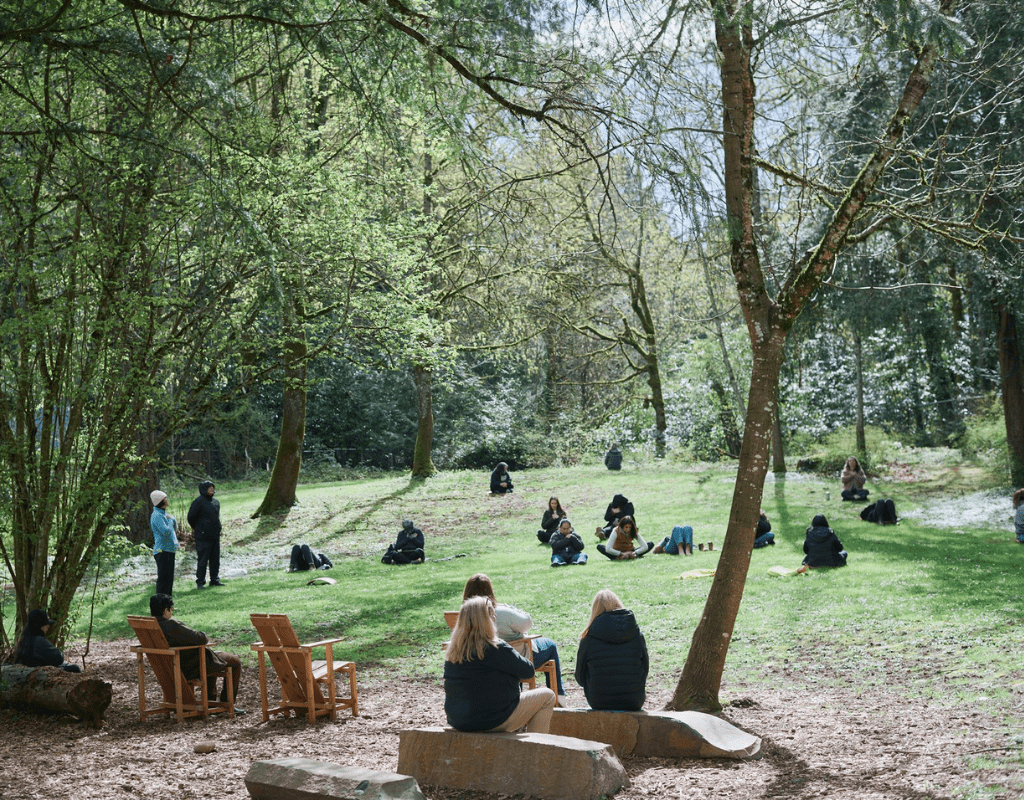
Facilitator Bea Yeh leads team members through a guided meditation.
Farm to ECE programming targets a critical developmental period for very young children, ages 0-5 — the time to build their taste buds and familiarity with nutritious foods. Additionally, ECE creates opportunities for young children to explore seasonal, local produce; experience belonging and exploration through culturally relevant foods, and to expand hands-on learning experiences that build vocabulary, math, literacy, fine motor, science, teamwork, and culinary arts.
The five Oregon-based teams from the inaugural cohort of the ECE Institute are continuing on this year (2025-26) for Year 2 of the Farm to ECE Institute: Awesome Blossom Child Care in Albany, Adelante Mujeres in Forest Grove, Neighborhood House Head Start in Portland, Mt. Hood Community College Early/Head Start in Gresham, and Southern Oregon Head Start in Central Point. Offering teams the option to continue with a second year of the Institute provided teams with more stability and resources to build on their Farm to ECE momentum.
Teams spent the morning in a forest bathing workshop organized by facilitator Bea. Forest bathing is a restorative Japanese healing practice that invites participants to slow down and connect to their senses in the natural world. During the two-hour workshop, Bea led team members through a guided meditation in a sunlit expanse of grass and a slow-walking practice through the forest and trails of the garden, and invited staff to share their thoughts. The workshop concluded with a cup of tea together.
Lunch was catered by Chefs Naomi Molstrom and Kyoko Adcock from Ikoi No Kai, a Nikkei community lunch and cultural program based in Southeast Portland. In addition to a variety of Japanese dishes made with local ingredients, they also cooked whole-grain yakisoba noodles from Umi Organic, a local noodle company that sells their yakisoba to schools across the state. Lola Milholland, the owner and founder of Umi Organic, joined during the lunch hour to share more about her farm to school and ECE journey and the different ways school meal programs have served her yakisoba noodles. Through Lola’s talk, team members were able to gain more insight into how local producers may approach sales with early childhood buyers such as themselves.
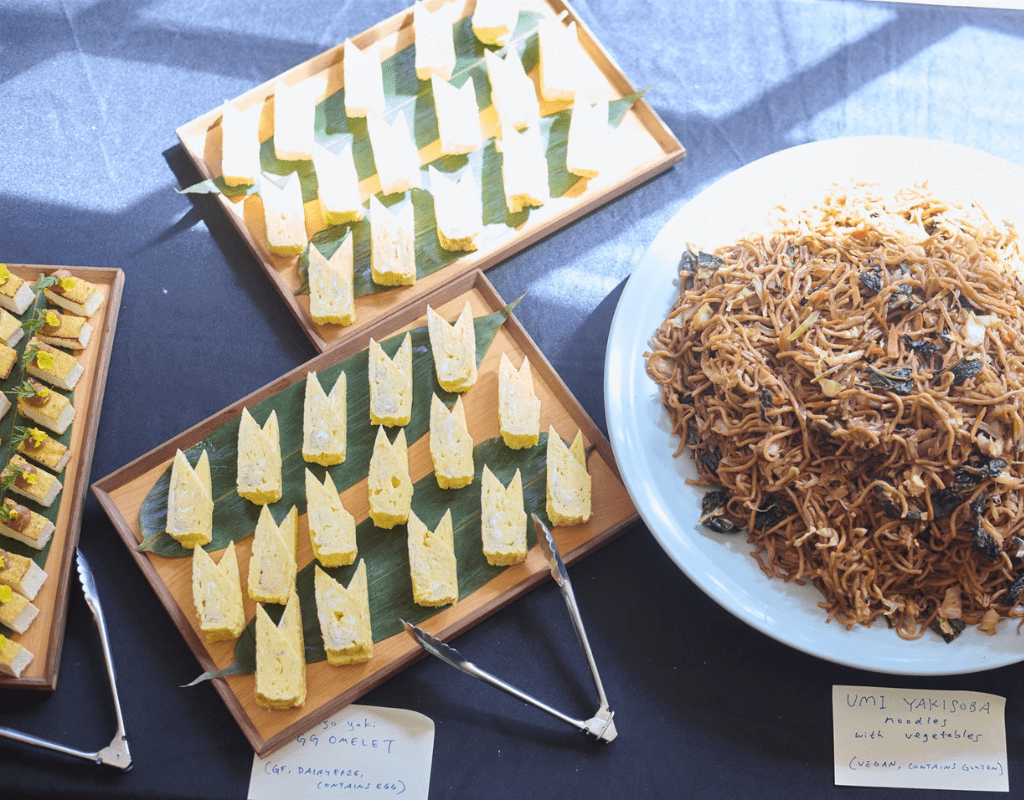
Lunch catered by Ikoi No Kai chefs Naomi Molstrom and Kyoko Adcock, featuring yakisoba from local producer Umi Organic.
Many retreat participants uplifted the forest bathing activities as a highlight of their retreat experience. They appreciated the intentional time to relax and slow down to connect with their senses and with nature, especially amidst increased stress for families, caregivers, and communities due to uncertainty and cuts facing Head Start programs and family separation, fear, and violence stoked by U.S. Immigration and Customs Enforcement (ICE).
The impact of increased ICE presence has been felt across the state. Several of this year’s ECE programs named the additional stress from ICE raids as one of the key challenges they anticipate in implementing Farm to ECE across their program. This response from the Adelante Mujeres team in the pre-survey in particular was formative in planning for this spring retreat.
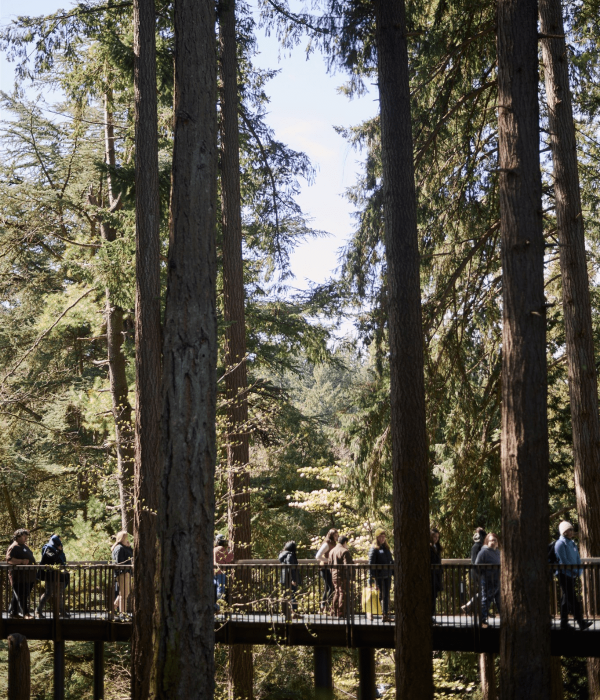
Team members walk along Leach Botanical Garden’s aerial tree walk.
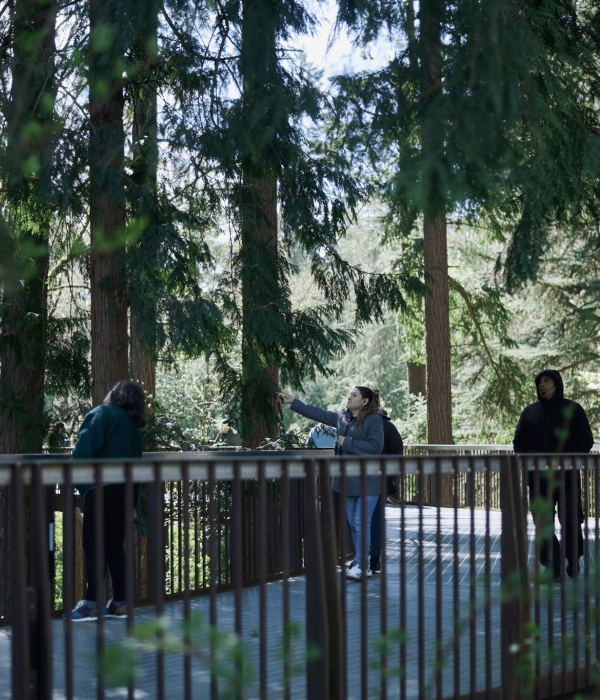
Team members pause to look at the nature around them.
“As we continue integrating Farm to ECE across our program, a key challenge we anticipate is balancing implementation with the current realities facing our children, families, and staff,” said the Adelante Mujeres ECE team. “Many of our families are experiencing increased stress and instability related to the immigration climate in our community, which directly affects children’s emotional well-being, attendance, and family engagement.”
Their staff have shifted to prioritizing family emotional support and connection to resources alongside program implementation, which makes it difficult for the Adelante Mujeres team to focus on their original Farm to ECE goals. Although Farm to ECE activities enhance and complement early childhood learning, it is often difficult for early childhood staff to integrate Farm to ECE into their programming due to financial, staff, and time constraints. The ICE raids also limit families’ ability to engage consistently in and benefit from Farm to ECE activities.
“We see Farm to ECE as an opportunity to support connection, cultural identity, and a sense of safety, and we hope to continue developing strategies that are flexible, trauma-informed, and responsive to our families’ needs,” said the Adelante Mujeres ECE program.
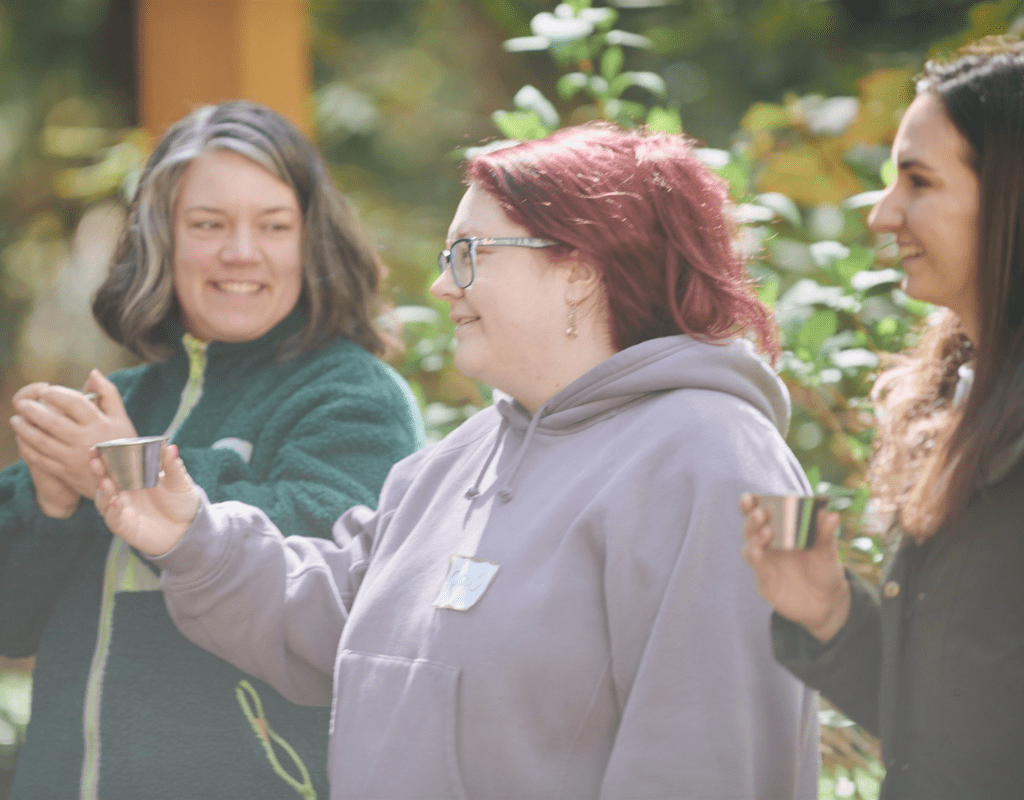
Team members share tea at the end of the forest bathing workshop.
After lunch, Bea led a workshop centered on somatic awareness activities that can help team members reduce stress amongst staff, students, and families. These activities guided team members through how to reconnect with their senses and regulate feelings of anxiety, stress, and overwhelm. Teams appreciated how applicable the forest bathing activities are to their work, with one team member expressing that they plan to share what their team learned with their broader team and implement the learnings into their program’s daily practices.
Teams also spent time with their coaches to share updates on their Farm to ECE programming and update their action plans. Team members value the dedicated time to focus on their Farm to ECE goals. The Awesome Blossom team has been working on providing meaningful hands-on learning, which led them to adopt a cow for their students to learn from. For the Mt. Hood Community College team, they are focusing on using Farm to ECE as a way to bridge different departments and reduce siloes.
“Having dedicated, unrushed time to connect as a team was particularly helpful. It allowed for deeper conversations, relationship-building, and more thoughtful collaboration than we typically have during our regular workday,” said Lupe Yundt, administrator at Adelante Mujeres.
Teams will continue to make progress on their Farm to ECE action plans and meet with their coaches through the remainder of the school year. Year 2 of the Farm to ECE Institute will end in June 2026 with a virtual celebration where teams will recap their programs’ Farm to ECE journeys and reflections from participating in the Institute.
Thank you to Luis Acosta from Acosta Services LLC, who has provided live Spanish translation for all in-person and virtual Farm to ECE Institute events.
In addition to Ikoi No Kai and Umi Organic, we thank the other local producers and businesses who nourished us throughout the day: La Casa de Mamá for breakfast, Coava Coffee Roasters for coffee, People’s Food Co-op, and SybmiOp and Portland Nursery for planters, soil, and local seeds.
In 2024, along with Adelante Mujeres, Child Care Aware Northwest/Opportunity Council, City of Seattle Department of Education and Early Learning, FoodCorps, NorthEast Washington Educational Service District 101, Oregon Farm to School Network, Prevent Child Abuse Oregon, Shelburne Farms Institute for Sustainable Schools, Washington Farm to School Network, Washington State Department of Agriculture, Washington Office of Superintendent of Public Instruction, Washington Supplemental Nutrition Assistance Program—Education (SNAP-Ed), and Zenger Farm, Ecotrust launched a professional learning experience for early childhood professionals to grow comprehensive farm to ECE programming in both Oregon and Washington. Adapted from a model developed by Vermont FEED and Shelburne Farms, this multi-state Farm to ECE Institute was the first of its kind between Oregon and Washington.
For the academic year 2025-26, Ecotrust and the Oregon Farm to School Network have partnered to support the 5 Oregon-based teams for Year 2 of the Farm to ECE Institute. Applications for the second Farm to ECE Institute cohort are now open until June 5, 2026.

Blog
PROGRAM UPDATE | At the second retreat of the Farm to Early Childhood Education Institute program, participants focused on skills building and activities for each team to increase hands-on gardening and nutrition experiences for the youngest members of our communities.

Press release
Portland, OR — November 29, 2023 — Ecotrust and a group of regional partners are excited to launch the Oregon and Washington Farm to School Institutes Project to grow comprehensive farm to school and farm to early childhood programming in both states.

Blog
Meet the six Farm to Early Childhood Education advisors educating children ages 0-5 in the garden, at the table, and in the classroom.