Learn how small businesses and school buyers have entered the farm to school marketplace and how they are able to sell to school and early childhood programs in Oregon.
Farm to school and early care and education (ECE) supports access to local foods through gardening activities, agricultural education, and local food purchasing at schools and ECE sites. This work requires building strong relationships.
In Oregon, food producers and nutrition staff are doing incredible work so students in their communities can eat fresh produce and culturally relevant dishes, while deepening their connection to their local food system. These stories uplift their care and perseverance and provide insight into what building relationships between local producers and school districts and early childhood programs can look like.
For producers who are interested in selling to schools and early childhood programs, we’ll share how Salsas Locas, Fishpatrick’s Tuna, Happy Curry Foods, and Full Cellar Farm have entered the farm to school marketplace and how they are able to sell to school and early childhood programs in Oregon.
School and early childhood nutrition staff who are looking for guidance on how to increase their programs’ local procurement will learn how Mt. Hood Community College Head Start and Early Head Start Nutrition Services Manager Kara Carsner and Reedsport School District Food Service Director Thomas Kyelberg are building relationships with producers in their area. They both reflect on how buying local makes their menus more culturally diverse, navigating funding for local procurement, and how they have built stable relationships with producers in their area.
Local tuna melts for meal programs
Fishpatrick’s Specialty Canned Tuna
Patrick Roelle of Fishpatrick’s Specialty Canned Tuna has been selling his wild-caught albacore tuna to schools since 2024. Keep reading to learn more about how he began building relationships with schools (including his first customer Reedsport School District) and early childhood programs across the state, and increased his farm to school sales.
Patrick Roelle poses at Reedsport Harbor. Photo credit: Emilie Chen
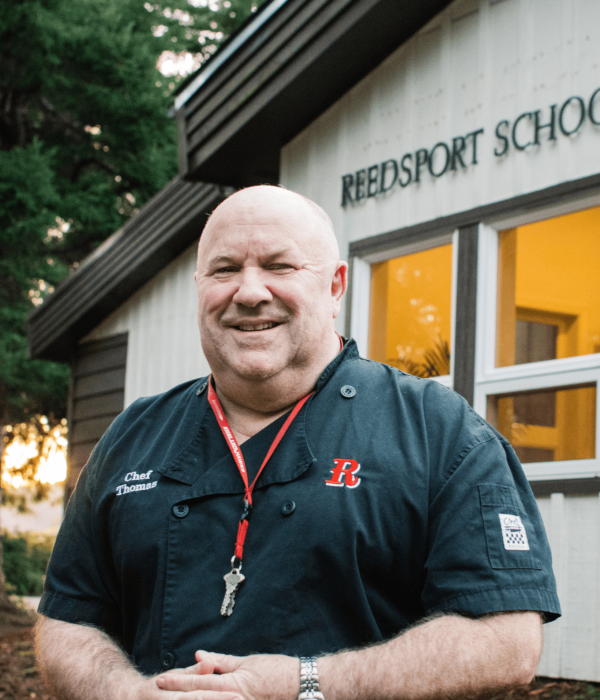
Thomas Kyelberg at Reedsport School District office. Photo credit: Emilie Chen
Culturally diverse, local foods
Speaking with Thomas Kyelberg, Reedsport School District
For Thomas Kyelberg, incorporating local ingredients into his school menus allows him to support producers in the community (like local Reedsport fisherman Patrick Roelle), and offer students more nutritious and culturally diverse foods. Learn more about his process creating relationships with local producers and the importance of farm to school funding.
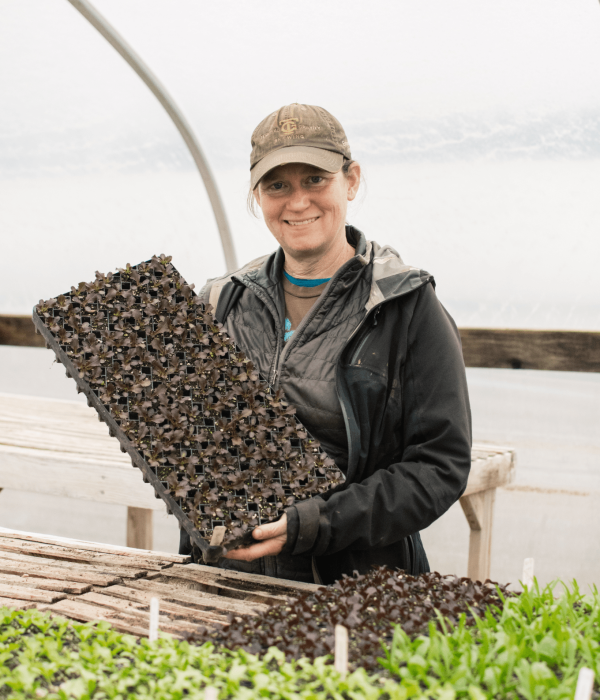
Emily Cooper, farmer and owner of Full Cellar Farm, never imagined that selling to schools could be possible—until she attended the Oregon Farm to School Conference. Now, as a regular produce seller for Mt. Hood Community College, Emily and her crew member Amy Wooley share the wisdom they’ve gleaned on their farm to school and early care and education journey.
Emily Cooper poses with a tray of plant starts. Photo credit: Emilie Chen
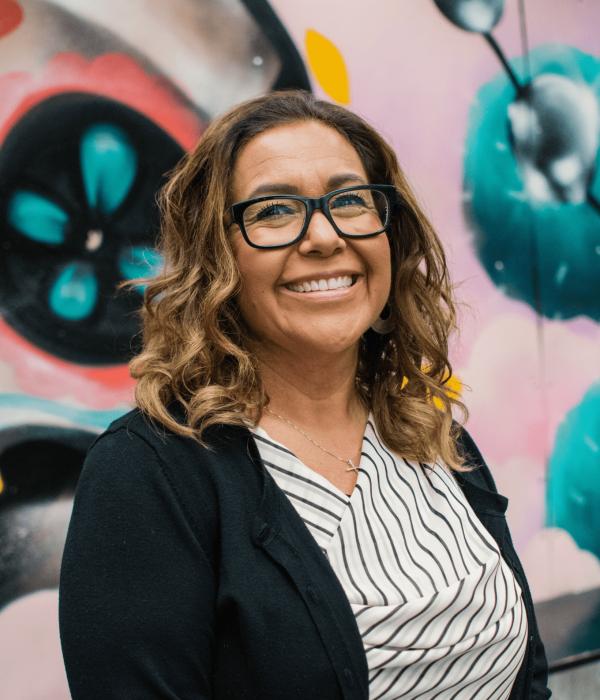
Lucy De León smiles in front of Salsas Locas. Photo credit: Emilie Chen
Tamales and more for schools
Advice from Lucy De León of Salsas Locas
Since 2018, Lucy De León and her team at Salsas Locas have made a variety of Mexican foods for schools and early childhood programs across Oregon and are now one of the most well-known local school food producers in the state. Learn how she started selling to schools and how she maintains consistent sales with meal programs.
Incorporating local procurement into school and early childhood meal programs can be slowgoing at first, but has the potential to provide consistent sales for producers and fresh, diverse food options for students. Make use of these stories and the resources below to support your farm to school and ECE path.
We provide resources, technical assistance, and networking opportunities to support garden education, local food procurement, and policy advocacy across Oregon’s farm to school community.
The Farm to School Program works to connect Oregon farmers, ranchers, seafood harvesters, and food processors with school cafeterias, early child care centers, and summer meal sites.
We connect school food buyers with Oregon producers who are ready to sell to schools. Here, schools can search a directory of more than 120 food businesses who grow, harvest, and process more than 45 products.