Emily Cooper, farmer and owner of Full Cellar Farm, never imagined that selling to schools could be possible—until she attended the Oregon Farm to School Conference. Now, as a regular produce seller for Mt. Hood Community College, Emily and her crew member Amy Wooley share the wisdom they’ve gleaned on their farm to school and early care and education journey.
Emily Cooper started Full Cellar Farm at the Headwaters Farm Business Incubator Program in 2014 and has been farming organic produce in Boring, Ore. since 2019. Every year, Emily and her team grow over 50 varieties of vegetables for their Community Supported Agriculture (CSA) members and recently, for the Mt. Hood Community College (MHCC) Head Start and Early Head Start.
Emily never imagined that selling to schools could be possible until she attended the 2024 Oregon Farm to School Conference, a biennial gathering for farmers and producers, food service directors and staff, educators, and other farm to school community members to learn and network across the state. Attending it gave Emily more confidence and concrete steps to help her figure out if she should sell to schools.
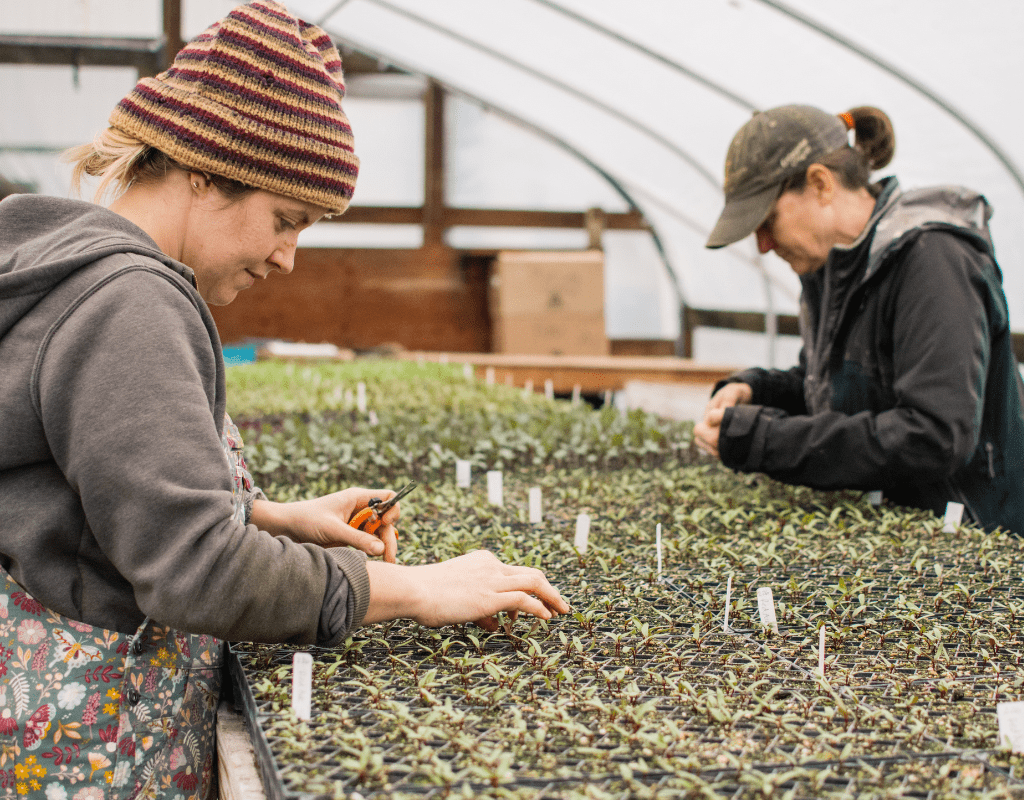
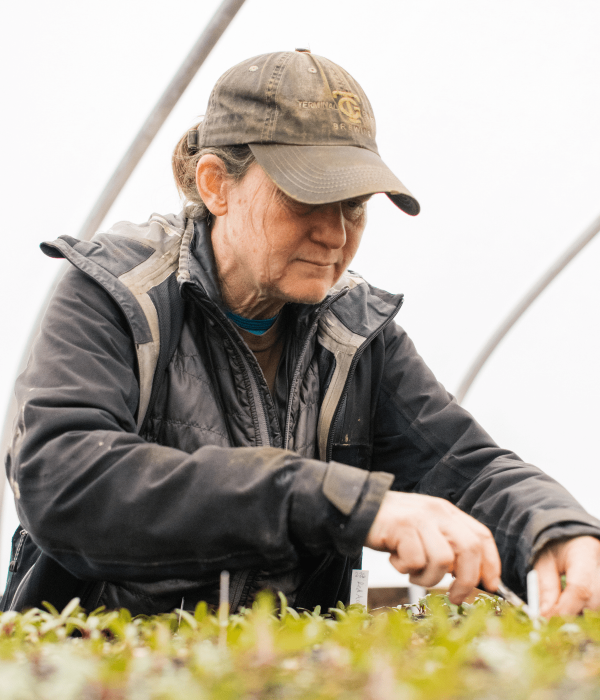
Amy Wooley and Emily tend to seedlings in the greenhouse. Photo credit: Emilie Chen
She says learning that there were regional procurement coordinators that could help facilitate connections with schools was the “number one piece of information I learned at the conference that made it feel attainable. Otherwise, you can waste tons of time cold calling schools, having no idea who you’re supposed to talk to… So just having someone who can make the introduction between the right parties is critical.”
At the conference, Emily met her regional procurement coordinator, who sent her a list of school and early childhood education (ECE) program contacts to reach out to. She has since started building relationships with the contacts who responded back to her, and has worked especially closely with Kara Carsner, nutrition services manager at MHCC Head Start and Early Head Start.
“That is a fancy way of saying that I make sure all the kids get fed,” laughed Kara.
“Finding the right person is like number one [most important]… Kara is gold,” said Emily. Kara has been an excellent buyer to work with because she understands how to incorporate local products into her menu while balancing her ECE program’s nutrition requirements and her kitchen staff’s capacities.
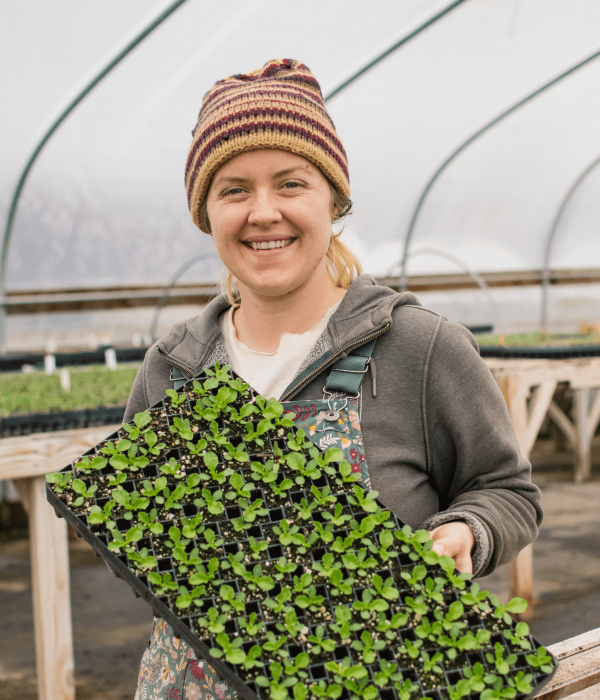
Amy poses with a tray of starts. Photo credit: Emilie Chen
Crop planning for school and ECE program buyers
Some vegetables can take months to grow.
“I think that’s something that a lot of the purchasers aren’t aware of. You can’t conjure these vegetables up in a few weeks or even a couple months, in some cases,” said Emily.
For school buyers who are interested in buying more regularly or buying larger volumes of produce, Emily says the fall and winter months are good times to start discussions with small farms around the crops they would like.
“Our crop planning season is mostly in November and December, and we can keep crop planning for next winter until April or so. But after that, it becomes harder and harder for us to have the thing they want in time for when they want it,” said Emily.
“
That’s something that a lot of the purchasers aren’t aware of. You can’t conjure these vegetables up in a few weeks or even a couple months, in some cases.
Emily Cooper, farmer and owner, Full Cellar Farm
Both Emily and Kara point to Harvest for Healthy Kids (HFHK) as an easy way to incorporate local foods into school menus. HFHK is a curriculum program started by Portland State University and MHCC Head Start and Early Head Start that promotes healthy eating habits among preschoolers through repeated exposure to different local fruits and vegetables.
Each month’s featured fruit or vegetable is included in meals and in classroom activities. (K-12 schools have a similar curriculum resource called “Harvest of the Month,” which also features a local, seasonal fruit or vegetable each month and offers educational materials to incorporate the produce into the cafeteria, classrooms, and garden). Kara knows the featured HFHK fruit or vegetable schedule months in advance, so she has been able to proactively order specific items from Full Cellar Farm.
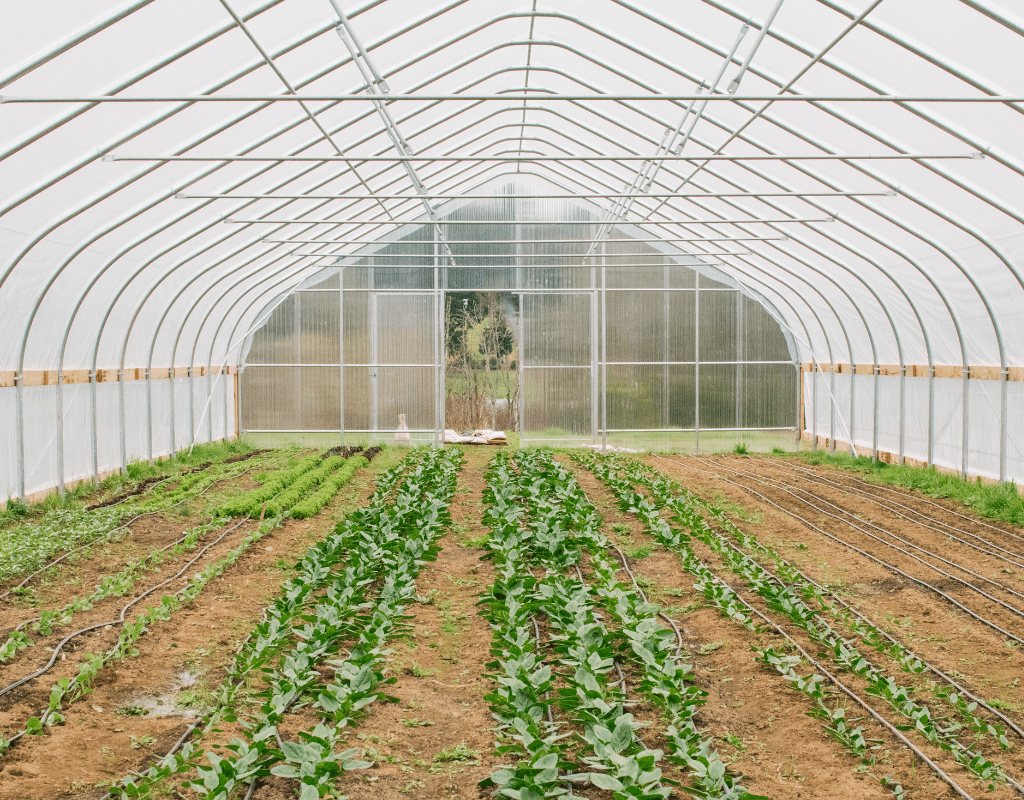
Full Cellar Farm received an Oregon Farm to School Equipment and Infrastructure Grant to purchase a high tunnel greenhouse, potato digger, root washer, and salad spinner. Photo credit: Emilie Chen
Second year of farm to school
When Full Cellar Farm started their second year working with schools and ECE programs, Emily and her farm crew felt like they had a better understanding of the process and what produce buyers would actually request. Emily highlighted the distinction of what items buyers say they would be interested in purchasing and what items they actually bought. During their second growing season, Full Cellar Farm focused on growing the produce that schools and ECE programs bought the previous year.
They also have a better sense of what information they need from schools to facilitate a successful farm to school relationship. Full Cellar farmer Amy Wooley noted that it is helpful to know how many kids schools and ECE programs are serving each week and how much space they have to store produce.
“If they are working in a smaller kitchen, they’ll order smaller amounts of things or a smaller variety of things, but maybe more regularly,” elaborated Emily. “Depending on what sort of labor and kitchen equipment they have for cooking can also determine what crops they have the capacity to process.”
Knowing what format lettuce and greens schools and ECE programs prefer was also important for Full Cellar farmers to learn, as the farm’s typical process of bunching greens for their CSA members may not work for school kitchen staff.
Emily will ask school buyers, “What are you looking for? Like, here’s our harvest and delivery schedule. Does that work for you? And what amounts of things are you looking for? Can you give us examples? If we said we had lettuce mix, would you come back and order 10 pounds? Or would you order 100 pounds?”
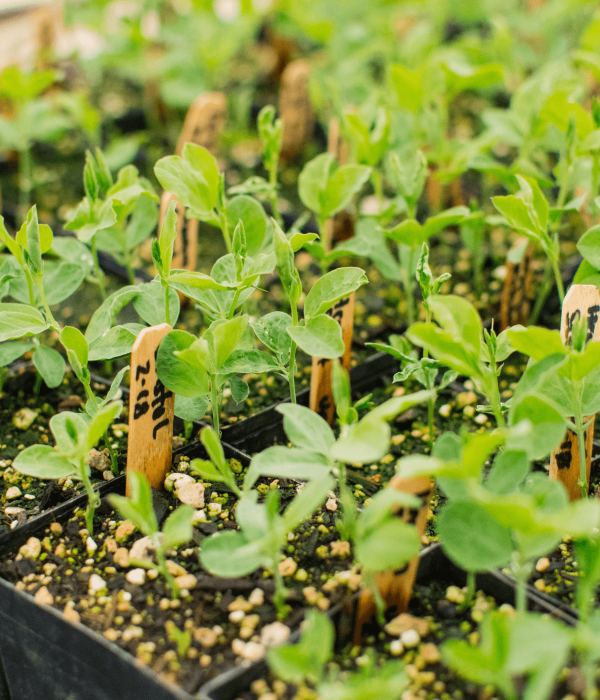
Vegetable starts in the greenhouse. Photo credit: Emilie Chen
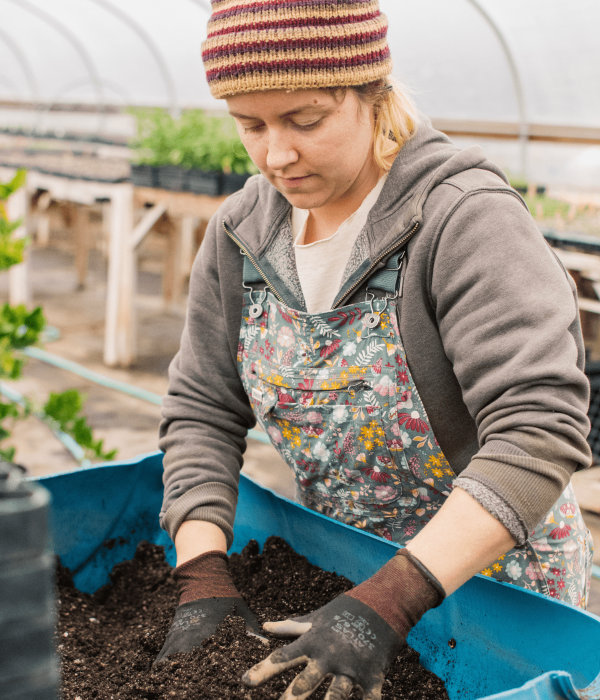
Amy mixes soil in preparation for seeding plants. Photo credit: Emilie Chen
Emily and Amy laughed as they recounted the time they offered cherry tomatoes to Kara at MHCC and Kara ordered a hundred pounds.
“At one point, we sent Kara an email that we had cherry tomatoes, [we] finally felt comfortable saying that we had them for wholesale because we want to prioritize our CSA members as well,” said Amy. “And so we gave them [MHCC] a share.”
“But our CSA didn’t get tomatoes that week,” said Emily. “We told our CSA that week, no cherry tomatoes this week because we’re giving them to the preschoolers.”
This year, Full Cellar Farm also has more farm infrastructure to support their sales to school buyers. They were awarded an Oregon Department of Agriculture Farm to School Equipment & Infrastructure grant and have purchased a potato digger, root washer, salad spinner, and a new high tunnel to grow more vegetables in the winter.
“
This is a two-way relationship, and this is a benefit to working with farmers is that you can have more say in how things look when you get them, some more personal connection.
Emily Cooper, farmer and owner, Full Cellar Farm
Feedback from school buyers
As Full Cellar Farm continues to strengthen relationships with school buyers, Emily says she would love to hear more feedback from school buyers.
“It is helpful to know maybe we could wash that a little bit less, or maybe we could take a few fewer leaves off. It would save us time, which would bring the price down. And maybe they would rather have it be a little bit cheaper than perfect, you know?” said Emily. “And so I would love to get a lot more feedback from people. We don’t get a lot of feedback.”
For example, when Full Cellar Farm sold beets to a school buyer for the first time, it was helpful to hear that they wanted mostly larger beets in their next order, as opposed to a variety of sizes. As a farm that only sold CSA shares in the past, they had to adjust how they were packing and processing their vegetables in order to sell to schools.
Emily views this adjustment period as all part of the learning curve of farm to school, as school buyers adjust to communicating with farmers as opposed to bigger sellers like food distributors.
“This is a two-way relationship, and this is a benefit to working with farmers is that you can have more say in how things look when you get them, some more personal connection,” said Emily.