Community Food Systems Coordinator
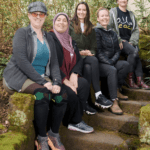
Kara Carsner, nutrition services director at Mt. Hood Community College Head Start and Early Head Start. Photo credit: Jenny Tseng
Through Nutrition Services Director Kara Carsner’s local procurement efforts, the students in Mt. Hood Community College Head Start and Early Head Start programs are introduced to a variety of seasonal produce. Below, Kara shares how she uses Harvest for Healthy Kids to feature local vegetables and how she builds a strong relationship with Full Cellar Farm.
This is a part of the Farm to School Stories series.

Like Emily Cooper of Full Cellar Farm, Kara Carsner attributes the Farm to School Conference for kickstarting Mt. Hood Community College (MHCC) Head Start and Early Head Start’s farm to school programming. At the conference, she connected with local farmers and producers, Portland-based nonporfit Growing Gardens, and her regional procurement coordinator.
For some kitchens, training their staff in the new skills needed to process whole ingredients is a significant part of the learning curve of incorporating more fresh vegetables and fruits into menus. As Kara reflected on MHCC Head Start and Early Head Start’s path to incorporating more local products into their menus and classroom curriculum, she highlighted how her predecessor in her role paved the way.
“My predecessor very much started the fresh produce movement…A lot of training is required for working with fresh produce, so that is what I have been focusing a lot of my efforts on,” said Kara. “At this point, staff are pretty used to it; it’s been seven, eight years that produce is coming in fresh.”
Providing her staff with the skill-building opportunities they need to cook new recipes with local foods is an important consideration for Kara. She will organize trainings for her cooking staff on more complicated cooking techniques. For example, on the day that we spoke with her, she had been helping out in the kitchen with a new, trickier recipe.
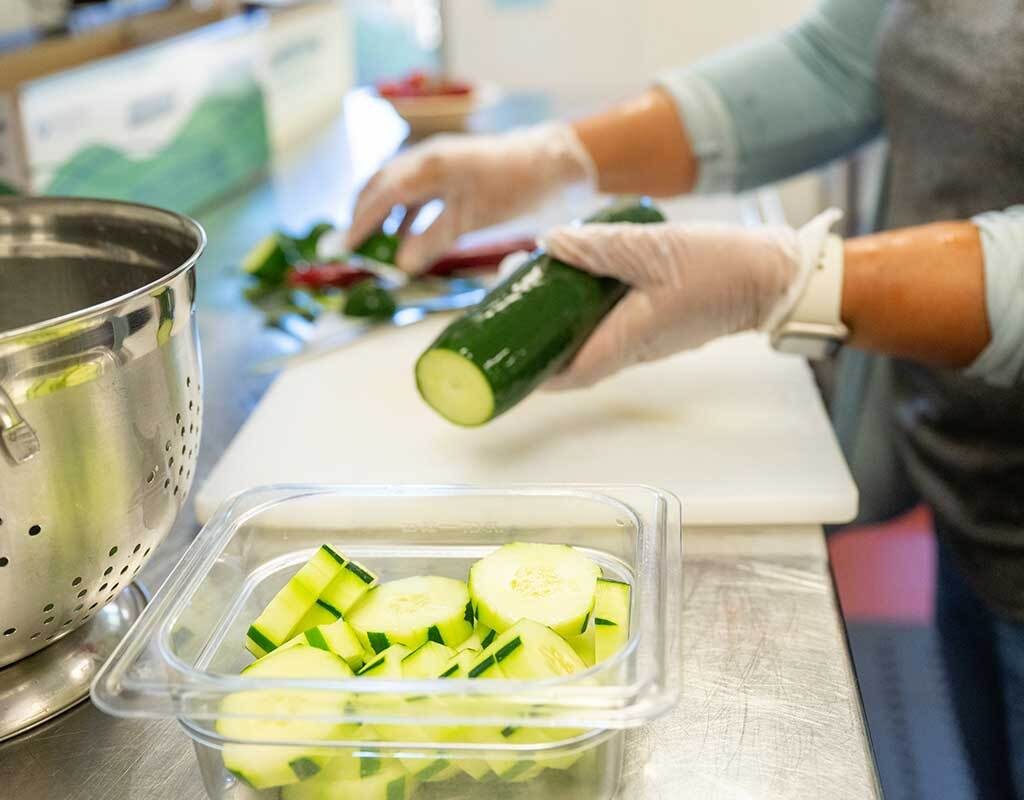
Kitchen prep at Mt. Hood Community College’s Early Childhood Center. Photo courtesy of Oregon Department of Agriculture
Kara focuses on highlighting recipes originating from Mexico, Latin America, and Egypt, regions where many of the families in the program come from. She explained that some of the more typical American foods in school meals like chicken nuggets may not resonate with students in the program. Buying from local producers has given Kara more opportunity to offer culturally relevant foods, such as sauces from Happy Curry Foods and tamales from Salsas Locas.
“Families are coming from so many different backgrounds… they’re here in America, but they also are retaining so much of their history, their background,” said Kara. “That’s really valuable and really important too. I try to highlight family backgrounds through the menu and recipes.”
She says the program still has a long way to go as they navigate multiple different priorities: satisfying Child and Adult Care Food Program (CACFP) meal program requirements, uplifting the many cultures present in the program, satisfying young palettes, and of course, working within tight budgets.
Kara emphasized the need for increased farm to school funding, especially in light of the increase in grocery prices this past year. Working within the constraints of the federal reimbursement rate for CACFP is already difficult. Even though the MHCC Head Start and Early Head Start program serves the minimum required amount for each meal and snack, teachers will tell Kara that their students want more food.
“At the end of the day, a lot of it comes down to advocacy. We need more people advocating for more funding,” said Kara. “We need more Farm to School funds… And we’re very cognizant of the fact that the budget is tight. But education and being able to feed kids in schools is so important. It’s so valuable. If a kid is hungry, there’s no way they can learn.”
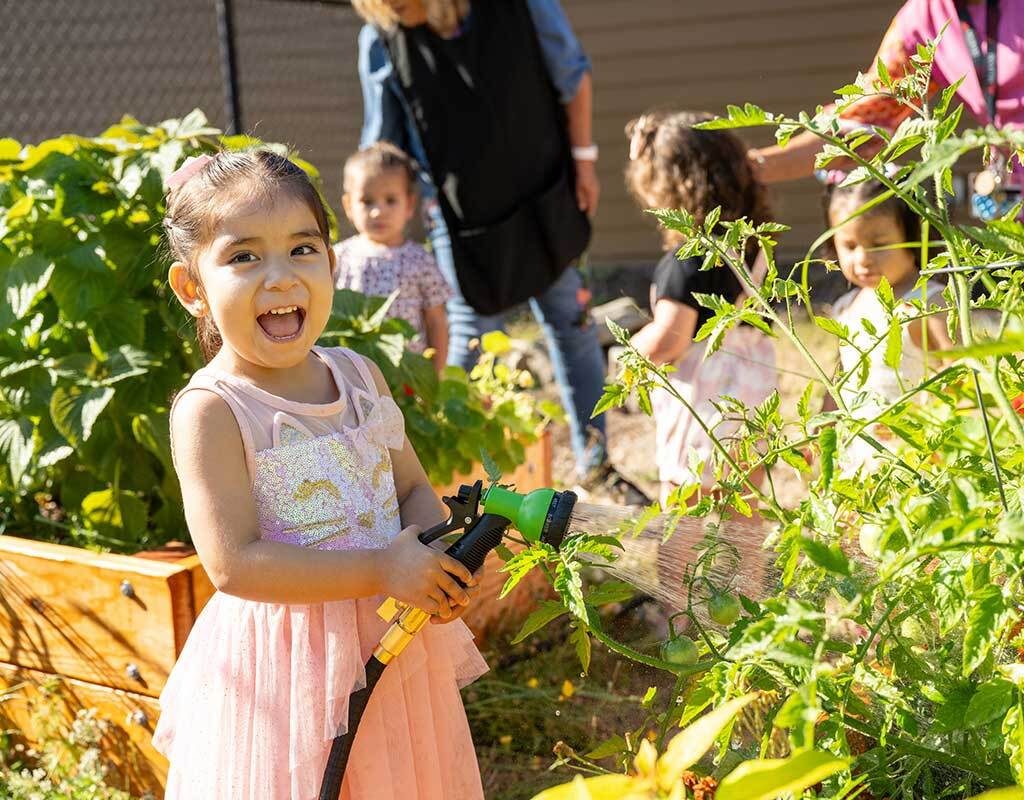
Young students at Mt. Hood Community College’s Early Childhood Center water the school garden. Photo courtesy of Oregon Department of Agriculture
She recognizes that eating new foods can be an intimidating prospect for preschoolers. “Eating is such an intimate thing, and especially for kids,” said Kara. The Harvest for Healthy Kids framework is a way to repeatedly introduce young students to different seasonal and locally grown fruits and vegetables in a variety of ways.
Beets were the featured item the month that we spoke to Kara, and they were highlighted on the MHCC menu in a few different ways, including steamed, roasted, and fresh in a salad. Her team also sent whole gold and red beets with the leafy greens attached to teachers to use for cooking activities or lesson plans. Teachers will ask students to use their senses to familiarize themselves with the fruit or vegetable.
“One of our favorite activities to do is to put the product in a bag and let the kids reach in and touch it… and then we have them describe it,” said Kara. “Because we have so many different cultures and especially because of the high cost of food right now, when we do our Harvest for Healthy Kids trainings, we’re very intentional by saying, this is not a food item to be played with, but there are ways to explore these items without having to eat it.” She says that having children explore different produce when they are young is a pathway for them to have more positive relationships to foods in the future.
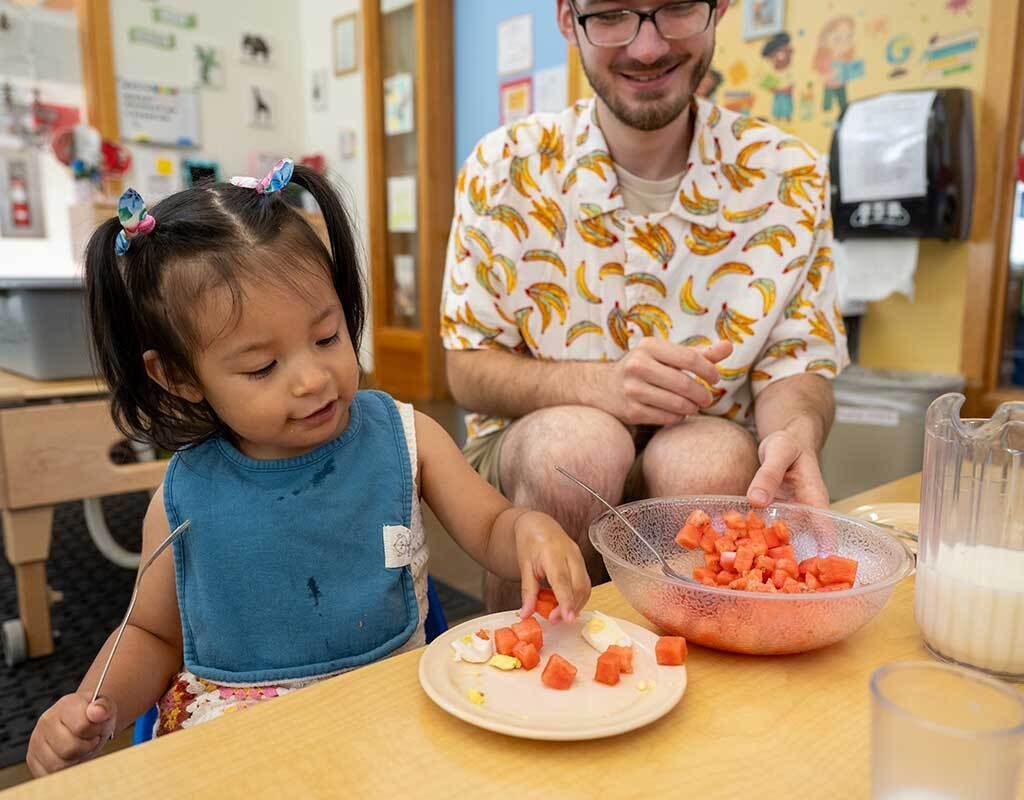
A staff member helps a student with breakfast at MHCC’s Early Childhood Center. Photo courtesy of Oregon Department of Agriculture
Kara and Emily connected with each other through their local procurement coordinator. Kara describes the process with building a relationship with and purchasing from Emily at Full Cellar Farm as “beautiful.”
“I was just so blown away by their [Full Cellar farmers’] passion,” said Kara. “We both have the same passion: we want to provide amazing produce for these young kiddos and families. I think being able to connect that way and having that same goal in mind was really helpful in developing a really awesome relationship.”
For Kara, Emily’s persistence in building their relationship and her ideas of how to build more strengths within the MHCC program have made their work together successful. Emily keeps Kara updated on produce availability throughout the year, and Kara is able to adjust her menu depending on the timing. Even with her strong relationship with Emily, Kara acknowledged that for her program’s staffing and budget, buying local still feels challenging.
“Any opportunity that we have to work with local farms, like Full Cellar, is a joy but does have its challenges because that is extra paperwork, that is extra communications, that is extra emails,” Kara said. “It’s something I’m passionate about, and I love to do it. But sometimes I don’t have capacity to do as much as I want. At the end of the day, my main goal is going to ensure that kids are fed.”
In 2026, Kara continues to work with local farmers such as Full Cellar and food hubs such as the Gorge Farmer Collective.
“If you’re not passionate about it, it’s rough. But if you’re not passionate about it, what are you doing in this business?”