Communications Director
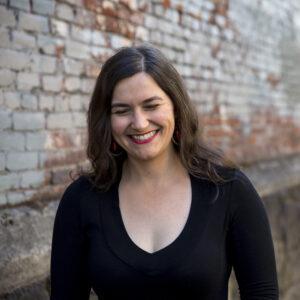
Shelly Covert. Photo credit: Amy Gonzalez
Shelly Covert is the executive director of the California Heritage: Indigenous Research Project and a tribal council member and spokesperson for the Nevada City Rancheria Nisenan Tribe. Through the 2025 Indigenous Leadership Awards, Shelly is being recognized as an emerging leader for her powerful voice in reversing the erasure of Nisenan people in California history, advancing federal recognition of her tribe, and sustaining Nisenan community and culture.

Shelly Covert, Nevada City Rancheria Nisenan Tribe, recalls a time when being Nisenan was a closely held part of her identity. Shelly, who acts as the spokesperson for the Nisenan Tribe, described the experience in a recent interview as, “being a ghost in your own homelands.” But today, in part through Shelly’s determined efforts, the contemporary Nisenan experience is regaining recognition, and the Tribe is reestablishing a physical foothold in their homelands.
The Nisenan Tribe was nearly erased after gold was discovered in the Sierra Nevada Mountains in 1848. The ensuing California gold rush resulted in the deaths of 98 percent of Nisenan people, who were hunted like game; their villages destroyed and displaced by mining activities. In testament to the fortitude of the Nisenan Tribe, the people held onto their creation stories, sacred place names, language, and culture through oral history passed down in Nisenan families.
“
My grandfather was never bitter. My mom wasn’t bitter. We were able to talk about the truth of the genocide and the truth of what happened to the people here without being bitter.
—Shelly Covert
Sharing a childhood memory, Shelly recalled her grandfather at a family gathering held near a ghost town adjacent to a major hydraulic mining site: “He was looking out over the diggins and said, ‘They washed all these mountains away with a big fire hose to get to the gold. And they turned those hoses on the people as well, but this is our place. This is where we’re from.’”
The ancestral homelands of the Nisenan Tribe extend from the crest of the Sierra Nevada Mountains and the north fork of the Yuba River, to the west side of the Sacramento River and the northern banks of the Consumnes River. Oral histories, she said, tell of migrating birds blacking out the sky, vast herds of elk and antelope, and rivers so full of salmon that you could walk on their backs to reach the other side. For millenia, Nisenan people stewarded this abundance, with archaeological evidence documenting human presence in these areas dating back more than 10,000 years.
Two key initiatives—stewarding the ‘Uba Seo Gallery and the recent purchase of an ancestral village site called Yulicah—exemplify Shelly’s leadership in restoring recognition for the Nisenan Tribe.
The ‘Uba Seo Gallery is located in downtown Nevada City, an epicenter for tourism surrounding the history of the gold rush era. The gallery, and the Nisenan stories shared on its walls, sit in direct conversation with California history, preserved in the city’s architecture, streets, and businesses.
“Once we got that brick-and-mortar, it was the first time we had permanent, physical visibility. Having that visibility really was a catalyst to people knowing who we are,” Shelly said.
Through the gallery, Shelly found a way to invite the broader community into more nuanced conversations about the gold rush that centered the Nisenan experience. “When you’re poking holes in that story, it can be very dangerous socially. Just to broach the subject of genocide, people’s defenses would get up so quickly. Inviting people in through art was like a back door. They were able to come in with their hearts and eyes open and hear the story in a way that had never been presented before.”
“
Inviting people in through art was like a back door. They were able to come in with their hearts and eyes open and hear the story in a way that had never been presented before.
—Shelly Covert
Shelly credits her mother, Virginia “Ginger” Covert, and grandfather with imparting the wisdom she needs to navigate subverting the gold rush narrative. Virginia Covert was the first woman to hold the position of Nevada City Rancheria Nisenan Tribal Chairperson.
“My mom navigated that world better than anybody I know. If people were being racist or incredibly biased, she knew when to draw a hard line, when to withdraw from a situation and a conversation, but she would go around and around the bush with kindness, with information that kept people interested and intrigued,” Shelly said.
“My grandfather was never bitter. My mom wasn’t bitter. We were able to talk about the truth of the genocide and the truth of what happened to the people here without being bitter. My mom said, ‘You can’t expect people to know, when none of us were taught any of this stuff in school, and they actually learned the contrary. Until we get all the information in one room, you can’t blame people for not knowing.”
For the past seven years, Shelly has produced a series at ‘Uba Seo entitled Visibility through Art, a project that draws inspiration from the oral histories safeguarded and shared by tribal members, and translates those stories into art. Visibility through Art began as a collaboration between local non-Native artists and tribal members and has evolved into an art-based education program for tribal artists to produce and showcase work that creates a more nuanced understanding of the contemporary Nisenan experience.
“It’s been a really beautiful unfolding,” says Shelly. “For our tribal elders especially, it’s given them the confidence to paint or tell their own stories with their own hands, in their own mouths, in their own minds and hearts.”
“
Culturally speaking, my generation knows little bits and pieces of things, but collectively, we know how to do way more than we ever thought. I really feel the ancestors around us so much, guiding those cultural practices.
—Shelly Covert
The desire to see her community celebrated and cared for is at the heart of Shelly’s vision for Yulicha, an ancestral village site recently purchased by the Tribe.
When Shelly became aware the previous owners, a Quaker organization that had operated a boarding school on the site for 60 years, were going to put the property up for sale, she took what she described as a bold step: She wrote a letter asking that the Nisenan Tribe be given first right of purchase. When the request was honored, Shelly acted quickly, leading a capital campaign that raised $2.5 million, primarily in direct donations, to pay for the land and buildings.
But the sales process was far from straightforward. Inspections revealed that years of deferred maintenance had led to degraded infrastructure and septic systems that were installed out of code. Working with a mediator, Shelly says, was a critical component to ensuring the success of the transaction.
The vision of what owning land could enable—and the strength of family—sustained Shelly amidst the challenges. Today, Yulicha houses several Nisenan families, acts as a gathering place for visiting members, and provides a safe space for land-based restoration, education, and ceremony. Shelly’s mom, Virginia, walked on in December 2024, shortly after the Tribe secured ownership.
“My mom was (at Yulicha) for a month, so it feels like she was able to get everybody here and tucked in before she left,” Shelly says. “It’s just been a really, really incredible journey. Everybody is reigniting their relationships with the land in their own ways, and it’s just been really beautiful to watch. Culturally speaking, my generation knows little bits and pieces of things, but collectively, we know how to do way more than we ever thought. I really feel the ancestors around us so much, guiding those cultural practices. It hasn’t even been a year yet, and the change it’s made in people has just been astronomical.”
Shelly Covert speaking at the 2025 Indigenous Leadership Awards.

Website
The Visibility Through Art initiative was inspired by the Nevada City Rancheria (NCR) Nisenan Tribe’s desire to engage local artists to create artwork that authentically represented the Nisenan and their rich but nearly forgotten history here in Nevada County.

Webpage
Celebrate this year’s awardees in a ceremony at the Redd on Salmon Street on October 15, 2025!
We warmly welcome friends, family, partners, and community members to join us at the Redd on Salmon Street for this special occasion.

Project Page
A celebration of the determination, wisdom, and continuum of Indigenous leadership across the region.